Interviews Reviews Guest Stars Fanzine Misc
Showing posts with label Superman. Show all posts

Friday, May 26, 2023

10 Questions With Comics Writer Joe Casey!

Our great friend Michele Fiffe (of COPRA fame) reached out one day and said "You have to interview Joe Casey, he's a huge DC in the 80's guy!" Well we got super excited and co-editor Mark Belkin reached out to see if we could answer 10 Questions. Turns out in addition to being on of the best comic book writers ever, his taste in DC comics of the 1980's is impeccable. Joe Casey had classic runs on Uncanny X-Men,  Adventures of Superman, Wildcats, Cable, and two of his creations (two of my favorite comics) Godland and Automatic Kafka. Highly recommended. Also, and I didn't know this until recently, Joe was one of the creators on the cartoon series Ben 10! Without further ado, 10 Questions with Joe Casey! 


1.What was the first DC comic you remember buying?
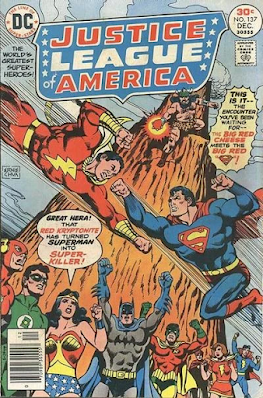
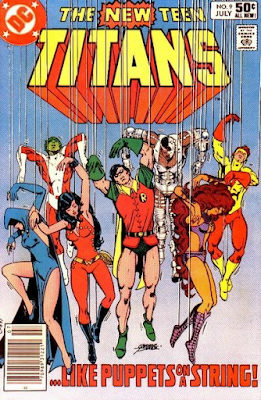
JC: Let’s see… the earliest DC Comics I can remember holding in my hands -- and reading over and over -- were Justice League of America #137, All-Star Comics #63 and Secret Society of Super-Villains #3. I have no doubt that my folks bought all three of them for me, because I was just a grade school scrub. Y’know, when I stop and think about it… those three comics really just sum me right up, in terms of my formative tastes. But the first one I remember actually buying on my own would have to be New Teen Titans #9. As a matter of fact, I didn’t even purchase it when I first saw it. I spotted it on the stands at the first Direct Market retailer I ever knew of (Walt’s Paperback Books in Nashville, TN). That classic George Perez cover, with all of the Titans hanging by marionette strings… after I got home, I couldn’t get it out of my head. It just haunted me. I even tried to redraw that cover from memory. So, clearly, I had no choice but to go back and buy that comic book. Once I read it, I was instantly hooked… and I was no longer exclusively a Marvel kid reader. 

2. What were your favorite DC comics runs in the 1980s?

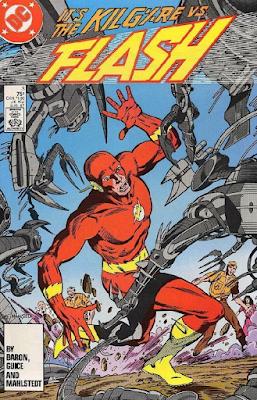
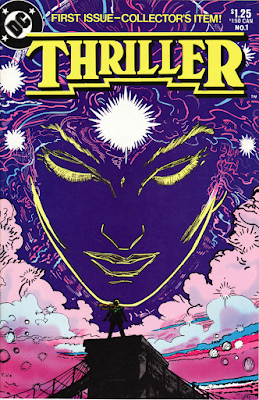
JC: There was a helluva lot to love during that decade. The Baron/Guice Flash (not to mention their two-issue Hawk story in Teen Titans Spotlight), the first two years of the Giffen/DeMatteis/Maguire Justice League, the Wolfman/Perez New Teen Titans, Fleming and Von Eeden’s Thriller, the Ostrander/McDonnell Suicide Squad, the Kupperburg/Lightle/Larsen Doom Patrol, the Giffen 5YL Legion, the Helfer/Sienkiewicz/Baker Shadow, Chaykin’s Blackhawk, Miller’s Batman work, Alan Moore on Swamp Thing


3. If you could go back in time and write for DC comics in the 1980s, what comic would you like to do? It can be anything you want, a re-boot, or taking over a book.

JC: Listen, I tried to write for DC Comics in 1987! I had the balls to send the great Dick Giordano a Batman fill-in script that I wrote on spec when I was just a punk teenager. Got a very encouraging, handwritten note back from Dick, which I still cherish. But to answer your question… to this day, I would’ve killed to take over for Mike Baron when he made -- in my humble opinion -- his all-too-early departure from Flash. Other than that, maybe DeMatteis’ gig dialoguing the Justice League books. 


4. Tell me all your thoughts on Jack Kirby, the Fourth World, and what that might mean to you?

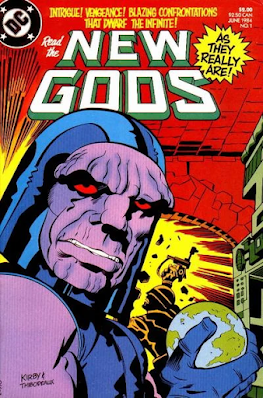
JC: I have no doubt that Kirby is an influence on anyone who works in superhero comics. Even if he’s not a direct influence, believe me, he’s in there. He’s always been there for me. But I was actually first introduced to the Fourth World characters in the Secret Society of Super-Villains series and then the JLA/JSA/New Gods crossover in Justice League of America #183-185. From there, I eventually inhaled the pure power of the deluxe Baxter reprints of New Gods and I never looked back. At that point, most of those original back issues were still somewhat getable, so I got as many of them as I could afford. And here’s an exclusive tease… that Fourth World material means a lot more to me now than it ever has, for very practical, career-related reasons.

5. Your first DC work was on Superman and the Flash. How did the 1980's runs on those characters affect your runs on those books?

JC: The first Superman comics I even cared about were written by Alan Moore -- the annual with Dave Gibbons and the two “finale” issues of Superman and Action. After that, I was definitely caught up in the excitement of the Byrne revamp. Some of those Byrne/Wolfman/Ordway issues definitely had an impact on my own work, especially when I spent my three years plus on Adventures of Superman. And I can tell you I was damn proud to be writing what I considered the “legacy” title. As for the Flash… well, from my previous answers, it should be obvious to one and all that I have an unhealthy, unconditional love for Mike Baron’s Flash relaunch. I can’t even tell you exactly why it hit me so hard when it first came out… or why it still sticks with me. I was already a big Baron fan from Nexus and Badger and his other indie work. And while I’d read random issues of the Barry Allen Flash series over the few years previous, it was never a must-buy for me. But the Baron relaunch, for the age that I was at the time, just seemed so modern, so cutting edge. Not that it was particularly groundbreaking comics (it wasn’t)… not that I didn’t bump on the differences between the Wally West I knew from New Teen Titans and Baron’s take (I did)… but it had a certain vibe and a narrative voice that just spoke to me. Props to editor Mike Gold (my absolute favorite DC editor of that period), who encouraged Baron to abandon just about everything that was associated with the previous Flash, including his famous Rogues Gallery, which seems inconceivable now. So it's much more than an influence… it’s literally embedded in my DNA as a writer.    

6. How did your admiration of DC in the 80's inspire your work on some of your most popular books/runs/creations; Wildcats, Automatic Kafka (<3), and Ben 10?

JC: You can draw a direct line from any of my “experimental” work straight back to the DC that published Thriller, Swamp Thing, Ambush Bug, Ronin, The Shadow, Dark Knight Returns, Animal Man, Black Orchid, Watchmen, Chaykin’s Blackhawk, Giffen’s 5YL Legion of Super-Heroes and other comics that definitely pushed the envelope when it came to “mainstream” comics. When I broke in as a full-time professional, I made it a personal mission to try and evoke the vibe of those 80’s comics in the ones that I wrote. 

7. Who were some of your favorite writers from the 1980s?

JC: David Michelinie, Mike Baron, Matt Wagner, Howard Chaykin, John Ostrander, Robert Loren Fleming, Keith Giffen, Steve Englehart, Walt Simonson, Frank Miller, Alan Moore. 


8. And subsequently, who were some of your favorite artists?

JC: Paul Smith, George Perez, Alan Davis, Trevor Von Eeden, David Mazzuchelli, Jackson Guice, Luke McDonnell, Howard Chaykin, Gene Day, Dave Stevens, John Romita Jr., Kyle Baker, Todd McFarlane, Kevin Maguire, Bart Sears, Paul Chadwick, Bernie Mireault, Frank Miller, Steve Rude, Erik Larsen, Ty Templeton, Dave Gibbons, Walt Simonson, Matt Wagner, Bill Sienkiewicz, Bob Layton, John Byrne, Keith Giffen, John Totleben, Brian Bolland. 


9. If you could pick any DC comic to do a Crisis crossover issue with, from that time, what comic would it have been?

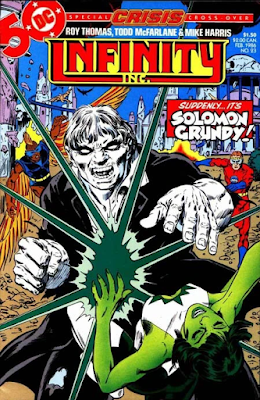
JC: Jeezus… y’know, I’m gonna say Infinity, Inc. Because history has shown us that Roy Thomas wasn’t too crazy about Crisis in the first place. So maybe I’d be doing him a favor, because I would definitely be into it. Plus, there’s a good chance it would’ve been drawn by Todd McFarlane during his wacky page design phase. But, to be honest, as much as I love the original Crisis (and I do), it was Legends that really connected with me. 

9b. How about Legends crossovers?

JC: If I had to choose, I think the BLUE BEETLE series could've been better served using LEGENDS as a way to push that series more into the spotlight. Not that I didn't read and love what Len and Paris were doing... but it was a bit too old school and the character was featured in LEGENDS to such a degree that maybe his series could've taken better advantage of the particular energy that was in the air in late '86/early '87.


10. What character who was big in the 80's, that may be forgotten, deserves some shine today?

JC: A few years ago, I would’ve easily answered, “Wally West”. But DC has taken some steps recently to rehabilitate the character. So that leaves only one answer for me: Thriller. The concept, the characters… it’s all so cool. A seminal book for me. God forbid DC collect the Fleming/Von Eeden issues, at least…!

DC in the 80's wants to thank Joe Casey for such a great interview! When we asked Joe if we could promote anything for him, he said "I think the most fun thing you could mention as "promotion" goes is that I've got some pretty big DC plans over the next few years. And i do mean BIG." WOW! That sounds exciting. Can't wait to find out what it is. Until next time. 

Thursday, March 9, 2023

Superman and Batman in Golden Look-Look Books

Hey children of the eighties, let's take a trip down memory lane and revisit those softcover Golden Look-Look Books that were so influential to us during our formative years:  

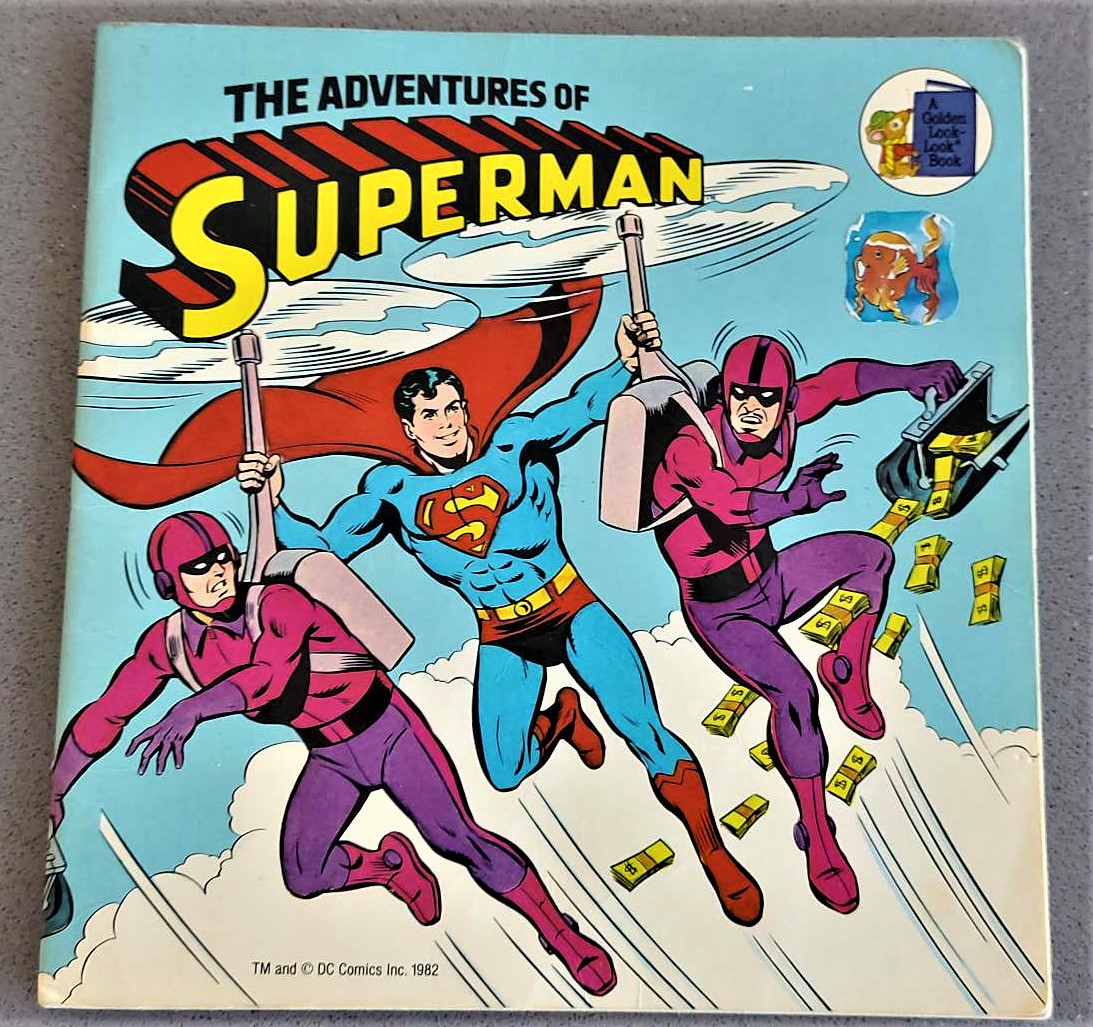
Superman vs the helicopter backpack bandits. Mine came with a free sticker

Golden Look-Look Books were an integral component of the Child of the 80s Grade School Experience™, along with a lunchbox and matching thermos set of your favorite cartoon characters and running shoes with velcro straps. Marketed as early learning educational material, Look-Look Books featured a vast array of then-popular characters from licensed properties and were often found in the children's section in libraries and department stores.

Since I'm dredging up memories from thirty-something years ago, I'll set the scene for you: you're in primary school and, after a long morning of managing two dozen unruly grade schoolers, your teacher decides to assign the class some 'quiet time' so she can nurse her headache under the guise of encouraging early childhood development. This usually involved siccing you and your classmates on the school library so the librarian can deal with you guys for an hour or so. Since most of us were still learning to read and most of the books were above our reading skill, we all made a mad dash for the most interesting books with lots of pictures of our favorite characters to look at -- this is where Golden Look-Look Books came in.

pile of Golden Look-Look Books.
image source: ebay.ca

Golden Look-Look Books were a line of inexpensive 21cm x 21cm softcover books published by Golden Books, and not to be confused with Little Golden Books (also published by Golden Books) which were roughly the same size but hardcovered. You may also remember Golden Super Adventure Books, Golden Book n' Tapes (children's books that came with an audio cassette) or the large-sized hardcover Golden Book movie storybooks that provided child-friendly summaries of then-popular films. When you think about it, Golden Books, an imprint of Western Publishing, appeared to have cornered the market on children's edutainment since they also published activity books, coloring books, and puzzles. As 80s kids, we were inundated with Western Publishing products and just didn't realize it at the time.

Since Western Publishing had licenses to characters from Walt Disney, Warner Bros, MGM and Universal Studios (among many others), Golden Look-Look Books had a wide assortment of popular characters from cartoons and movies to choose from when deciding who to feature in their books (such as My Pet Monster, Super Mario Bros., Legend of Zelda, Bugs Bunny, Sesame Street, Pac-Man, Garfield, Barbie, G.I. Joe, Winnie the Pooh, Snoopy and friends, Peter Pan, The Rocketeer...and a few more I'm sure I'm forgetting). 

Even Nintendo had a few characters featured in Look-Look Books.
image source: ebay.ca

Kids of the 80s were extra lucky because we were oversaturated with Saturday morning cartoons and action figure toylines who had no qualms with licensing themselves out to a publishing company who then marketed to us via "educational material" targeted towards youth. It was essentially advertising disguised as education. Did reading adventures about the Masters of the Universe remind me of MOTU toys and increase their value in my eyes? Hell yeah! Marketers, take note: this is how you create life-long brand loyalists.

Okay, enough history, on to today's feature presentation. As much I'd love to showcase ALL of these books, I'll have to stick to the ones with DC characters since we're a DC comics fansite. Let's start with The Adventures of Superman (Golden Look-Look Book edition):

This book used to belong to Jamie. Well, now we know who put the sticker on the cover.

While I'm not familiar with Patricia Relf or David Hunt, Kurt Schaffenberger started illustrating for Fawcett Publications back in the late 1940s and had wound up working for DC comics on the Superman titles from the late 1950s and onwards as penciller and/or inker. He had a notable run on New Adventures of Superboy as penciller from 1979 to 1984 (which is probably what he was doing when he got this gig -- the book was copyrighted in 1982). Unsurprisingly, a lot of comic book writers and artists (that only the hardcore comic book fans might be familiar with) often contributed to these books.


Superman's escape from Krypton pretty much sticks to the comic interpretation. Superman was a pretty big deal at this time (thanks to the success of the 1978 Superman film), and I'm relieved to see that they went with the colorful Silver Age costumes for Superman's parents rather than the dystopian movie versions. 


The page layouts of this particular book were very "comic book"-ish, and by that I mean the colors were vibrant and the story followed sequential steps and were separated by borders. It was probably stipulated from Golden Books that a brief origin story was included in this book so that kids could realize Superman's was from another planet and don't try these stunts at home.


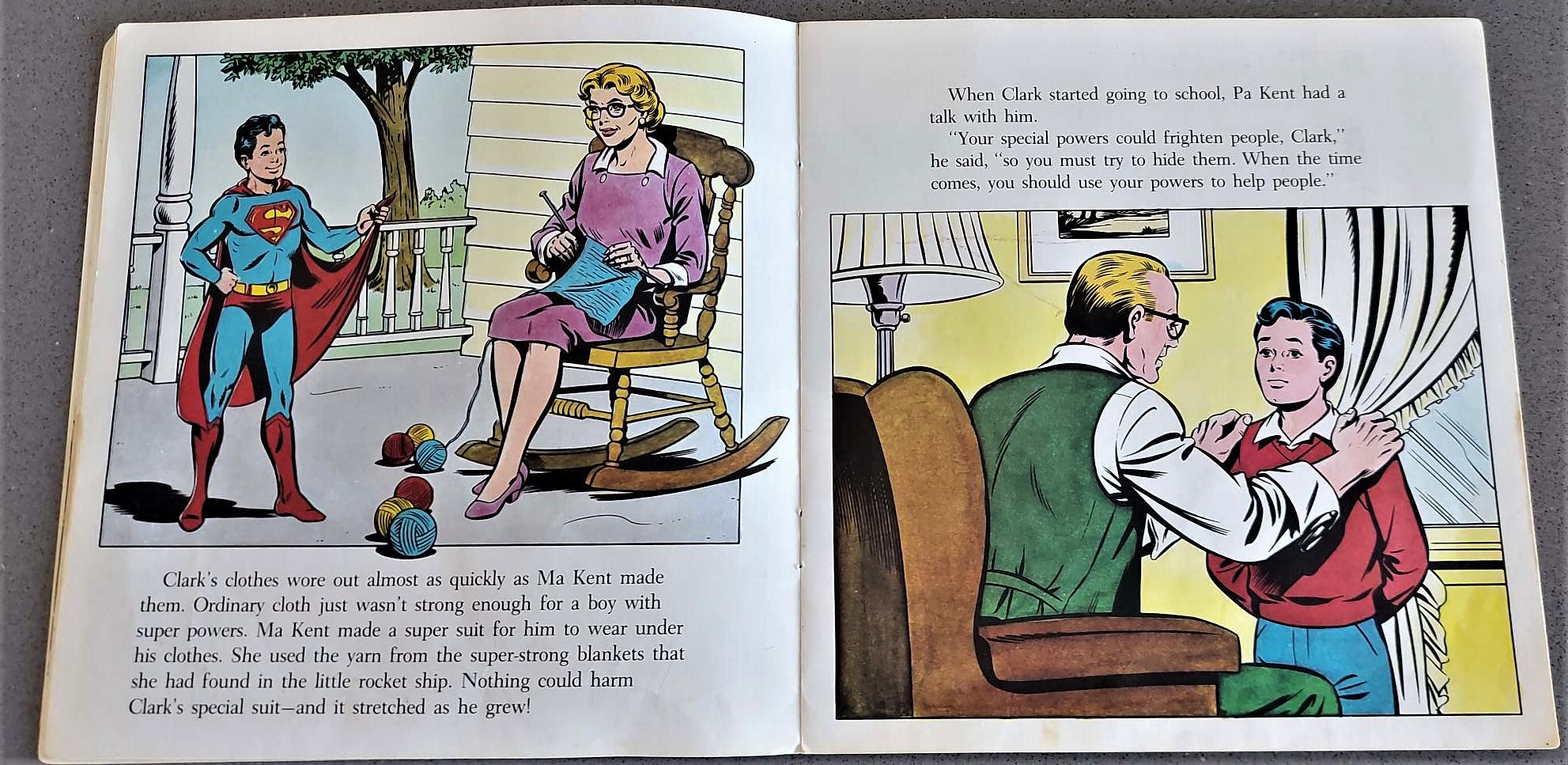
Ma Kent knits tiny Clark Kent a pint-sized Superboy costume. Pa Kent gives lil' Clark about "doing the right thing". This is like a mini morality play. 


Flash forward twenty-odd years, and it's a grown-up Clark working with (his friend) Lois Lane. We're finally introduced to the villain(s) and see a bit of action.

While I didn't question these things as an eight year-old, now I wonder -- of all the villains they could've used -- why go with complete unknowns like "propeller backpack"-wearing henchmen? They could've literally used anyone else (i.e. Intergang, Lex Luthor thugs, etc...). Maybe they're from a Superman comic or cartoon I'm completely blanking on? Either way, not really a big deal -- it still works for the story.


...and now we're at the denouement: Superman discovers the culprit behind all this and brings him to justice. Prior to learning Schaffenberger used to draw Captain Marvel Jr comics for Fawcett I was going to comment that the Evil Mastermind was a dead-ringer for Captain Marvel arch-enemy Dr. Sivana (albeit with a bad toupée), but I think this kind of explains itself now.


The story ends with Clark giving a knowing wink to the reader that they're both in on the secret of who Superman actually is and that Lois is completely clueless. Hey, it's kind of like Superman is building a rapport with the reader. All in all, this was a pretty harmless book and a quick read with nothing too complex or offensive. Well done, Ms Relf.

Golden Look-Look Books would be absent of DC characters until the second wave of Batmania hit North America as precipitated by the 1989 Batman film.

A 'Special Edition' Golden Look-Look Book featuring Batman and the Joker was released in 1990:

image source: ebay.ca

I don't own this one so I don't have much to tell you about it.  I do know that it was written by Jack C. Harris and illustrated by Al Bigley, Mike DeCarlo and Tad Zar Chow (penciller/inker/colorist, I'm guessing). Note that they went for the classic Super Powers designs of Batman and Joker as opposed to the Keaton Batman and Nicholson Joker designs.

Even the Super Powers Batmobile was adapted into this book. Image source: ebay.ca


Another 'Special Edition' Batman book was released in 1991, 'The Purrfect Crime' featuring Catwoman:


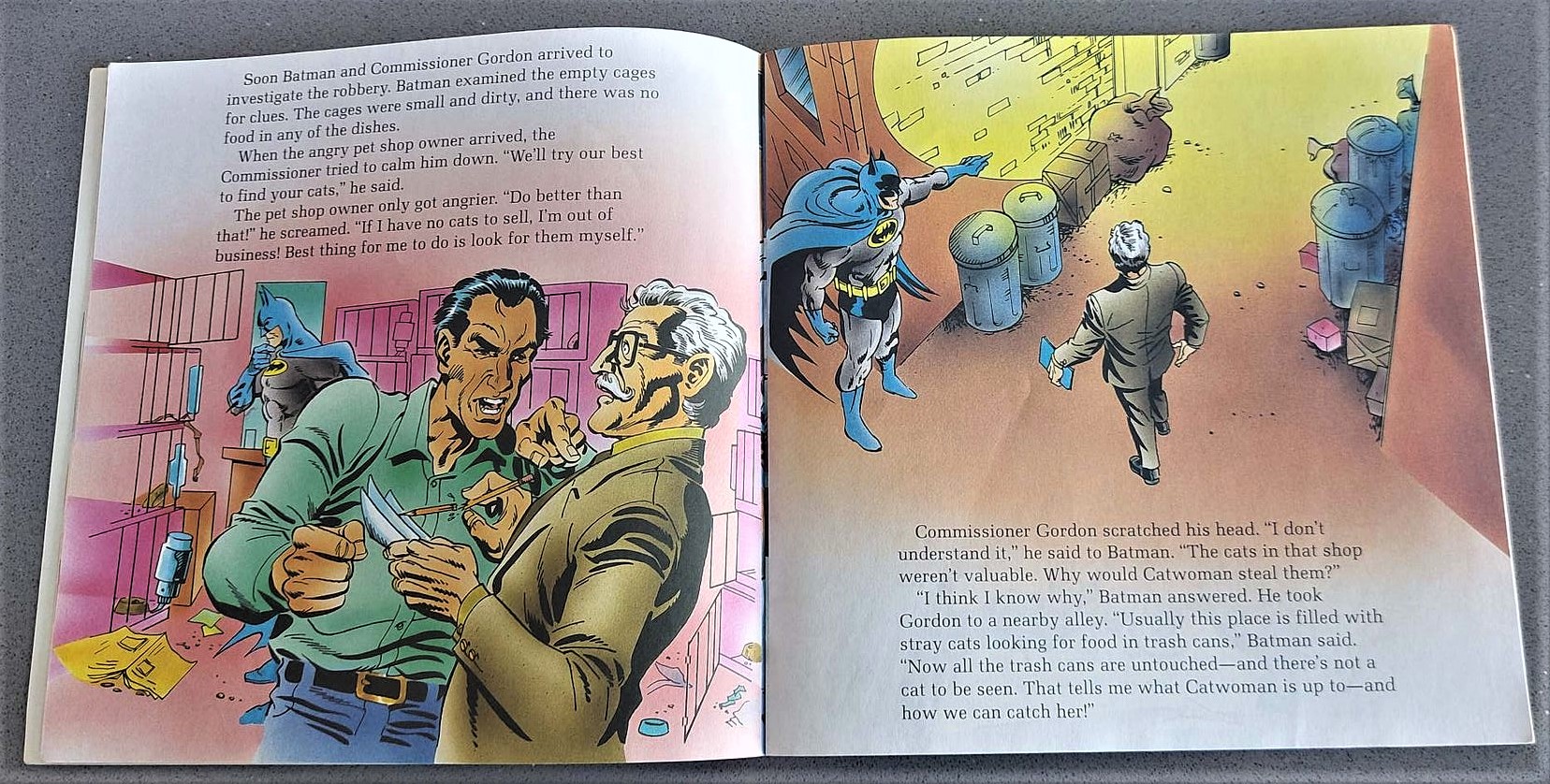
Andrew Helfer wrote this one, but the Bigley, DeCarlo & Chow artistic team remained the same. Let's just cruise through this one real quick:


The only thing I'm noticing here is that Catwoman's costume is looking very much like the one she wore in Mindy Newell's 1989 Catwoman mini-series -- which pre-dated Selina's Batman Returns black leather catwoman suit by at least 2 years -- and remained her main costume throughout Knightfall. [After which she switched back to a purple costume.]


Hey look, it's the "Cat-van"!


It took a tracer to find Catwoman's secret location? Why didn't he just get Robin, Huntress and Nightwing to drive around town until they spotted a van with cat ears parked on the street?

As you've undoubtedly noticed by this point, these 'Special Edition' Golden Look-Look Books are laid out less like comic books and more like illustrated stories. 


As the reader learns more about the motive for Catwoman's thefts they are left with an ethical dilemma: is it right to commit crime even if it's for the greater good? In this case, liberating felines from cruel conditions and neglectful owners. This is pretty heavy stuff for a kid; I think the Animal Liberation Front gives these books out for free as recruitment propaganda.

I would also like to give credit to the writer for not adding any romantic tension between Batman and Catwoman. Which would've came off as awkward.    


Thankfully, extremely rich Bruce Wayne is able to find a solution that makes everyone happy -- proving once again that money can fix everything.

Another Golden Look-Look Book featuring Batman was released in 1992, but this one just took several scenes from Batman Returns featuring The Penguin and the Red Triangle Circus gang and condensed it into a 24-page children's book:


There was a different creative team on this one: Michael Teitelbaum wrote it, and Rick Hoberg and Tad Chow illustrated it. Hoberg pencilled a lot of stuff for DC comics, and was probably best known for being the regular penciller on Mike Grell's Green Arrow in the early 90s.


Since this book featured the Red Triangle Circus gang, I would've been all over this. I do remember flipping through this book as a youth but for the life of me can't remember how it ends.


Since it incorporated aspects of the plot where the Ice Princess is kidnapped and falls to her death in a trap baited for Batman, I'm kind of wondering how/if they watered this down for a juvenile audience.


There were a few more Golden Look-Look Books set in the Batman The Animated Series and Justice League Unlimited universe, but these were all released after 1995. Oh yeah, the Batman & Robin film got it's own Golden Look-Look Book, too. This has been a pretty exhausting article to research and write about, and I'm running out of things to say...

...so, I'm going to leave on a high note and link to another blog's review of a Golden Super Adventure Go-bots book. Hope you enjoyed this article on Golden Look-Look Books and it brought back some fond memories of your youth.

Cheers,
Justin

Thursday, December 15, 2022

Cryptozoic Challenge of the Superfriends Card Game

Christmas came a bit early this year. Someone who knows me very well gifted me the Challenge of the Superfriends card game by Cryptozoic, knowing that I'm a pretty big fan of any game based on retro DC comic properties.  

Front of box

This is not a new game -- it was released in 2019 and I tried to convince Cryptozoic to send me a sample copy to review for this webzine [ha!] but had no luck. Them's the breaks. Anyone who tells you that blogging is a lucrative side hustle probably isn't referring to DC in the 80s. I like Cryptozoic and when I was experiencing an impulsive DC trading card collecting binge back in 2016 I picked up a few of their trading card sets which I reviewed here, here and here. They produce quality products, and I think they're based out of Montreal, and I know writer Martin Pasko was working with them in some capacity for a while before he passed away. Cryptozoic also created a few board games (i.e., Ghostbusters) and DC comics Deck-Building games that seemed to resonate with fans, so I was curious to see what Challenge of the Superfriends was going to be like. Truthfully, this was on my radar to pick up -- but life got in the way and I completely forgot about it. Better late than never.

Back of box

First up: this is NOT a Deck-Building game. It plays 2 to 4 players, and each player gets 10 power cards to play with throughout the game. In contrast, a Deck-Building game has players start with a small number of cards, but as the game progresses, you add cards to your deck thus altering your strategy. This just means that you only need to buy Challenge of the Superfriends to play it -- it's a complete game, and there are no expansions necessary/available. This is it.    


SET UP:

The game comes with 82 cards: four 10-card Player decks, one 10-card Challenge deck, and one 32-card Objective deck. The Challenge and Objective decks go in the middle. Each player picks a Player deck. You have four Player decks to choose from: Superman, Aquaman, Wonder Woman, and Batman & Robin. Each Player deck has three Special cards unique to the character, while the other seven are cards that every other Player deck has as well. 

In this scenario, there are three players -- one picked the Superman Player deck, another picked the Aquaman Player deck and the third player picked the Wonder Woman Player deck.

Okay, now that each player picked a Player deck, give your 10 cards a shuffle, pick 3 for your hand and don't show anyone. Now you're ready to play.


GAME PLAY:

This game is based on an old playing card game we all played as kids because we didn't really have the patience or strategic thinking to play cribbage or gin or any other games that required more complexity and understanding of statistics. It was a game called 'war' and was usually played against another opponent who had a stack of cards equal to your cards, and you'd both just simultaneously flip playing cards and the highest-valued playing card would win the 'match'. Challenge of the Superfriends is 'war', but with more reading involved.

Okay, you're all sitting at the table and paying attention? Good. Flip a number of cards from the Objective cards face-side up on the table proportional to the amount of players playing. There's two of you playing? Flip two cards face-side up. There's three of you? Flip three cards face-side up. If there's a card with a negative value face-side up on your first round, put it to the side and flip another card until all cards face-side up have positive values. Shuffle those negative value cards back into your deck. You only do this for your first round

Three players = three Objective cards flipped up. Since Grundy is worth the most points, the dominant strategy is to win Grundy by playing the most powerful card. Second place would most likely grab Manta, and third place would end up with Cheetah. 


Okay, you've got x Objective cards face-side up? And they're all positive value? Great. Each player selects a card from their 3-cards in hand, puts in face down on the table, and then you'll all flip your cards at once. Just like 'war'. And, just like 'war', the highest value card wins, and that player gets first pick of which face-side up Objective card they want to add to their score pile. 

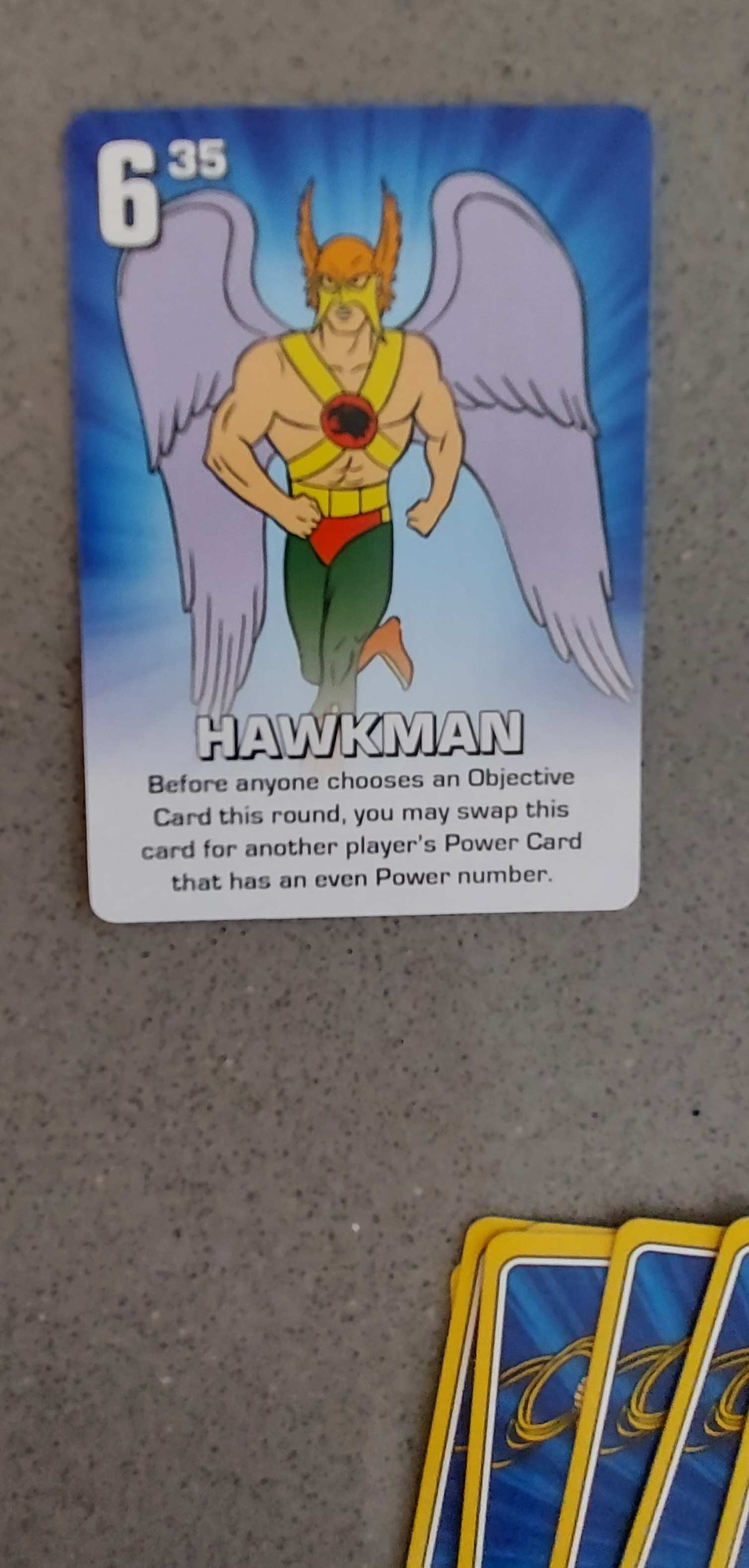
In this case, the Superman player flipped a Green Lantern card, the Aquaman player flipped the Flash card, and the Wonder Woman player flipped the Hawkman card. Green Lantern is worth '10', so he's the highest value in play. Ordinarily, he'd win the match and get first pick.

...but wait, there's more! As Player cards are flipped, there's text on the card that needs to be resolved -- sometimes the outcome will give you a bonus, screw over an opponent, or a bit of both. Some cards are only activated if you are the first player. Sometimes this will involve giving someone (even yourself) a Challenge card. Challenge cards typically aren't good things, so try to avoid receiving them. It's usually a negative modifier or something that will make your gameplay slightly more challenging. Objective cards with negative values will also have text on them, but that only starts to be an issue round two and beyond.

Hawkman's card says that he can swap for another player's card with an even value, so...


The Wonder Woman player now has the Green Lantern card, and Superman now has the Hawkman card. The Wonder Woman player also needs to pick up a Challenge card, as per Green Lantern's card text.

One last thing: If, while flipping your Power cards, two or more players play a card with the same value then it's a tie. The tie-breaker will be whoever has the highest secondary number following their primary number. 

If the Superman player and Wonder Woman player had both played their Green Lanterns, it would've been a tie since both are equal to 10...

...so they'd both need to compare the secondary number to determine the tie-breaker. Superman's Green Lantern has a higher secondary number than Wonder Woman's Green Lantern, so Superman would win this one. Note: both player still need to pick up a Challenge card, as per Green Lantern's text.

Okay, that's everything you need to know. Play for six rounds. and the player with the most points in their score pile at the end wins the game.


HOW DOES IT ACTUALLY PLAY?

The first time I played this game, out-of-the-box, was with one other player as we were 'test-driving it', so to speak. We read the rules, and did our best to follow the gameplay as outlined in the rulebook. Our first few rounds involved a lot of reading as we were trying to determine in what order the text on various Player, Objective and Challenge cards activated (hint: some are activated 'when revealed', some are conditional, and some last until next round) and what to do if a specific scenario came up where two or more text cards contradicted each other. Thankfully, the rulebook included in the game had all the answers -- and it was only 12 small pages. After a few rounds, we quickly got the hang of the game and then it was off to the races. 

After a few games a third player joined us. Of note: it's way easier to learn this game when someone shows you how to play. The game got a lot more interesting when there were three of us playing. We weren't able to recruit a fourth player, but played a few rounds and had a good time nonetheless. I'd describe the game as spontaneous and hard to strategize for. It's really a quick, chaotic little game. 


FROM A SUPERFRIEND FAN'S PERSPECTIVE

Alright, first of all, Cryptozoic wisely decided to go with the third season of the Hanna-Barbera cartoon: there was a larger cast of villains, more heroes, and Marvin & Wendy were noticeably absent (and replaced by the far more interesting Wonder Twins). Thankfully, the third season of the cartoon also saw more of the recently-introduced Apache Chief, Black Vulcan and Samurai featured in episodes. They're ALL accounted for in this game -- so, I'm very pleased with that.


The game's 4 starting Player decks (Superman, Wonder Woman, Aquaman and Batman & Robin) make sense since these were the 'original' Superfriends. The three specials in each Power deck are aptly thematic to the characters, and the designers picked some of the most meme-worthy images. 

That Batman & Robin 'Batmobile' Special is easily one of the best specials in the game -- if you can pull it off. The key thing about this game is that you can select which card to put down AFTER seeing the flipped-up Objective cards you are 'warring' for.

At a quick glance, all villains are represented in the Objectives deck and net you points based on their notoriety -- with Lex Luthor yielding you 15 points for his capture and Toyman getting you the least (3 points).


The Objective cards that DON'T feature villains are ones based on episodes, cost you points and will do something to change gameplay. So, things like this card, based on an episode I don't remember, will cost you 10 points if you have to pick it up, but also subtracts 2 from the value of everyone's Special cards played this round when it's flipped over:

This is an Objective card with a negative modifier.

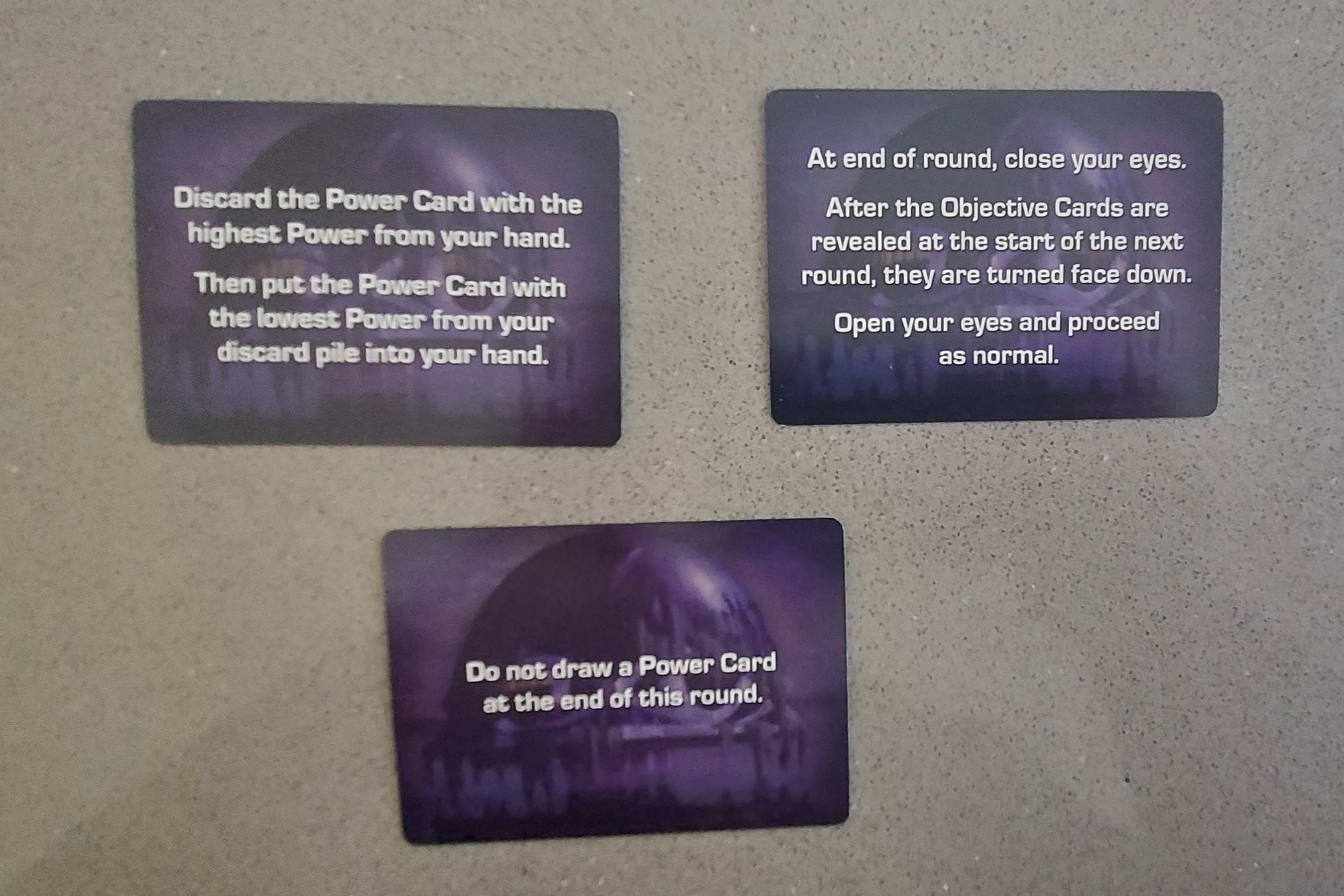
I did mention Challenge cards, and they do quirky little things to your detriment. The didn't get very creative with these -- it's just white text on a purple background:


OVERALL

I really liked this game and can't think of any way that it could've been improved. It wasn't terribly complex, it only took 30 seconds to set up, the cards and box were very good quality, the game didn't last very long, and the designers obviously had knowledge of the Superfriends cartoon and how the characters interacted.

While this game is probably best played with people who grew up watching the cartoon, the two other players I played with had little to knowledge of the Superfriends and enjoyed it regardless. This is one of those games you play when you're killing time -- either on a coffee break, waiting for a plane, or waiting for your dinner to get delivered.

I also think this game would also be great to play with an elementary school student who is learning about addition and subtraction and has moderate reading skills -- it definitely exercises your logical order/sequence thinking.

What could Cryptozoic possibly do to add to this? I don't know... maybe an expansion integrating characters and episodes from The Galactic Guardians? Maybe get Firestorm and Cyborg in there? Darkseid, Desaad, Kalibak and some Parademons? Maybe that scarier-looking T-800 Brainiac? Hard to say: the game seems to perfectly balanced that I'd be hesitant to add something to alter the dynamics. 

Anyways, highly recommended. I hope Cryptozoic does more with the Superfriends IP someday. 


-Justin