Interviews Reviews Guest Stars Fanzine Misc
Showing posts with label Mike Baron. Show all posts

Friday, May 26, 2023

10 Questions With Comics Writer Joe Casey!

Our great friend Michele Fiffe (of COPRA fame) reached out one day and said "You have to interview Joe Casey, he's a huge DC in the 80's guy!" Well we got super excited and co-editor Mark Belkin reached out to see if we could answer 10 Questions. Turns out in addition to being on of the best comic book writers ever, his taste in DC comics of the 1980's is impeccable. Joe Casey had classic runs on Uncanny X-Men,  Adventures of Superman, Wildcats, Cable, and two of his creations (two of my favorite comics) Godland and Automatic Kafka. Highly recommended. Also, and I didn't know this until recently, Joe was one of the creators on the cartoon series Ben 10! Without further ado, 10 Questions with Joe Casey! 


1.What was the first DC comic you remember buying?
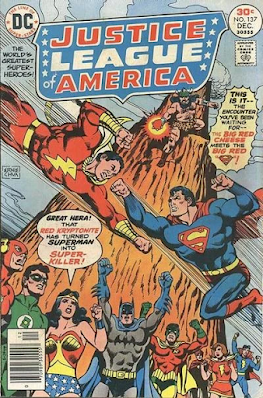
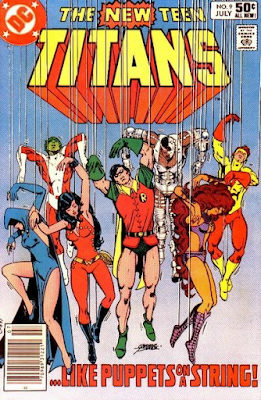
JC: Let’s see… the earliest DC Comics I can remember holding in my hands -- and reading over and over -- were Justice League of America #137, All-Star Comics #63 and Secret Society of Super-Villains #3. I have no doubt that my folks bought all three of them for me, because I was just a grade school scrub. Y’know, when I stop and think about it… those three comics really just sum me right up, in terms of my formative tastes. But the first one I remember actually buying on my own would have to be New Teen Titans #9. As a matter of fact, I didn’t even purchase it when I first saw it. I spotted it on the stands at the first Direct Market retailer I ever knew of (Walt’s Paperback Books in Nashville, TN). That classic George Perez cover, with all of the Titans hanging by marionette strings… after I got home, I couldn’t get it out of my head. It just haunted me. I even tried to redraw that cover from memory. So, clearly, I had no choice but to go back and buy that comic book. Once I read it, I was instantly hooked… and I was no longer exclusively a Marvel kid reader. 

2. What were your favorite DC comics runs in the 1980s?

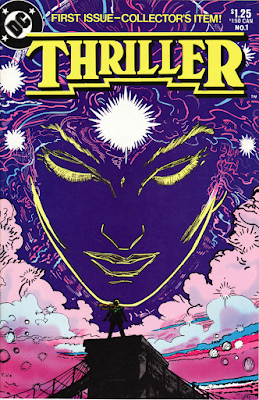
JC: There was a helluva lot to love during that decade. The Baron/Guice Flash (not to mention their two-issue Hawk story in Teen Titans Spotlight), the first two years of the Giffen/DeMatteis/Maguire Justice League, the Wolfman/Perez New Teen Titans, Fleming and Von Eeden’s Thriller, the Ostrander/McDonnell Suicide Squad, the Kupperburg/Lightle/Larsen Doom Patrol, the Giffen 5YL Legion, the Helfer/Sienkiewicz/Baker Shadow, Chaykin’s Blackhawk, Miller’s Batman work, Alan Moore on Swamp Thing. 


3. If you could go back in time and write for DC comics in the 1980s, what comic would you like to do? It can be anything you want, a re-boot, or taking over a book.

JC: Listen, I tried to write for DC Comics in 1987! I had the balls to send the great Dick Giordano a Batman fill-in script that I wrote on spec when I was just a punk teenager. Got a very encouraging, handwritten note back from Dick, which I still cherish. But to answer your question… to this day, I would’ve killed to take over for Mike Baron when he made -- in my humble opinion -- his all-too-early departure from Flash. Other than that, maybe DeMatteis’ gig dialoguing the Justice League books. 


4. Tell me all your thoughts on Jack Kirby, the Fourth World, and what that might mean to you?

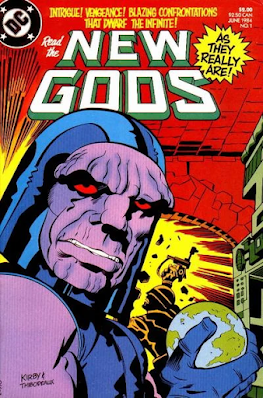
JC: I have no doubt that Kirby is an influence on anyone who works in superhero comics. Even if he’s not a direct influence, believe me, he’s in there. He’s always been there for me. But I was actually first introduced to the Fourth World characters in the Secret Society of Super-Villains series and then the JLA/JSA/New Gods crossover in Justice League of America #183-185. From there, I eventually inhaled the pure power of the deluxe Baxter reprints of New Gods and I never looked back. At that point, most of those original back issues were still somewhat getable, so I got as many of them as I could afford. And here’s an exclusive tease… that Fourth World material means a lot more to me now than it ever has, for very practical, career-related reasons.

5. Your first DC work was on Superman and the Flash. How did the 1980's runs on those characters affect your runs on those books?

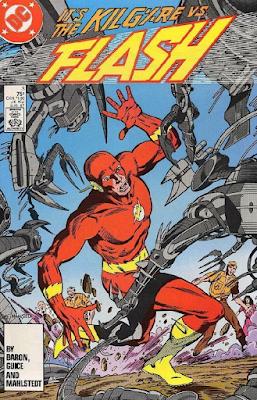
JC: The first Superman comics I even cared about were written by Alan Moore -- the annual with Dave Gibbons and the two “finale” issues of Superman and Action. After that, I was definitely caught up in the excitement of the Byrne revamp. Some of those Byrne/Wolfman/Ordway issues definitely had an impact on my own work, especially when I spent my three years plus on Adventures of Superman. And I can tell you I was damn proud to be writing what I considered the “legacy” title. As for the Flash… well, from my previous answers, it should be obvious to one and all that I have an unhealthy, unconditional love for Mike Baron’s Flash relaunch. I can’t even tell you exactly why it hit me so hard when it first came out… or why it still sticks with me. I was already a big Baron fan from Nexus and Badger and his other indie work. And while I’d read random issues of the Barry Allen Flash series over the few years previous, it was never a must-buy for me. But the Baron relaunch, for the age that I was at the time, just seemed so modern, so cutting edge. Not that it was particularly groundbreaking comics (it wasn’t)… not that I didn’t bump on the differences between the Wally West I knew from New Teen Titans and Baron’s take (I did)… but it had a certain vibe and a narrative voice that just spoke to me. Props to editor Mike Gold (my absolute favorite DC editor of that period), who encouraged Baron to abandon just about everything that was associated with the previous Flash, including his famous Rogues Gallery, which seems inconceivable now. So it's much more than an influence… it’s literally embedded in my DNA as a writer.    

6. How did your admiration of DC in the 80's inspire your work on some of your most popular books/runs/creations; Wildcats, Automatic Kafka (<3), and Ben 10?

JC: You can draw a direct line from any of my “experimental” work straight back to the DC that published Thriller, Swamp Thing, Ambush Bug, Ronin, The Shadow, Dark Knight Returns, Animal Man, Black Orchid, Watchmen, Chaykin’s Blackhawk, Giffen’s 5YL Legion of Super-Heroes and other comics that definitely pushed the envelope when it came to “mainstream” comics. When I broke in as a full-time professional, I made it a personal mission to try and evoke the vibe of those 80’s comics in the ones that I wrote. 

7. Who were some of your favorite writers from the 1980s?

JC: David Michelinie, Mike Baron, Matt Wagner, Howard Chaykin, John Ostrander, Robert Loren Fleming, Keith Giffen, Steve Englehart, Walt Simonson, Frank Miller, Alan Moore. 


8. And subsequently, who were some of your favorite artists?

JC: Paul Smith, George Perez, Alan Davis, Trevor Von Eeden, David Mazzuchelli, Jackson Guice, Luke McDonnell, Howard Chaykin, Gene Day, Dave Stevens, John Romita Jr., Kyle Baker, Todd McFarlane, Kevin Maguire, Bart Sears, Paul Chadwick, Bernie Mireault, Frank Miller, Steve Rude, Erik Larsen, Ty Templeton, Dave Gibbons, Walt Simonson, Matt Wagner, Bill Sienkiewicz, Bob Layton, John Byrne, Keith Giffen, John Totleben, Brian Bolland. 


9. If you could pick any DC comic to do a Crisis crossover issue with, from that time, what comic would it have been?

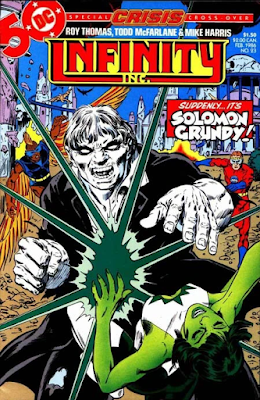
JC: Jeezus… y’know, I’m gonna say Infinity, Inc. Because history has shown us that Roy Thomas wasn’t too crazy about Crisis in the first place. So maybe I’d be doing him a favor, because I would definitely be into it. Plus, there’s a good chance it would’ve been drawn by Todd McFarlane during his wacky page design phase. But, to be honest, as much as I love the original Crisis (and I do), it was Legends that really connected with me. 

9b. How about Legends crossovers?

JC: If I had to choose, I think the BLUE BEETLE series could've been better served using LEGENDS as a way to push that series more into the spotlight. Not that I didn't read and love what Len and Paris were doing... but it was a bit too old school and the character was featured in LEGENDS to such a degree that maybe his series could've taken better advantage of the particular energy that was in the air in late '86/early '87.


10. What character who was big in the 80's, that may be forgotten, deserves some shine today?

JC: A few years ago, I would’ve easily answered, “Wally West”. But DC has taken some steps recently to rehabilitate the character. So that leaves only one answer for me: Thriller. The concept, the characters… it’s all so cool. A seminal book for me. God forbid DC collect the Fleming/Von Eeden issues, at least…!


DC in the 80's wants to thank Joe Casey for such a great interview! When we asked Joe if we could promote anything for him, he said "I think the most fun thing you could mention as "promotion" goes is that I've got some pretty big DC plans over the next few years. And i do mean BIG." WOW! That sounds exciting. Can't wait to find out what it is. Until next time. 

Thursday, September 14, 2017

The 1986 Deadman mini-series (written by Andy Helfer and illustrated by José Luis Garcia-Lopéz)

We're inching our way to Halloween, and what better time to review one of DC's most macabre super heroes? If you haven't read our review of the 1985 Deadman Deluxe Reprint series, I'd recommend you start with that (go ahead... we'll wait), because this mini-series picks up where that reprint series left off.


By the mid-to-late eighties, the 'mini-series' seemed to be DC's launch vehicle of choice for testing reader reaction to any new ongoing series they were thinking of piloting (see: Aquaman, Phantom Stranger, Peacemaker, Hawk & Dove, Shadow War of Hawkman, Red Tornado, etc). That was exactly what this was -- DC trying to determine if there was enough reader interest to merit a Deadman ongoing series. Short answer: no. 


If you're reading this article because you're curious about the life & times of Deadman, I'll give you the run-down of what happens in this mini:

Accompanied by his identical twin brother Cleveland and Batman, Boston Brand/Deadman is still recovering in Nanda Parbat after being poisoned by the Sensei. [Thankfully, later in the first issue, the reader is treated to a quick recap of everything that happened during those 1967/1969 Strange Adventures and Brave and the Bold stories leading up to this.] Rama Kushna wants Deadman to stay and become the defender of Nanda Parbat, but Deadman wants to leave and go back to the real world for a few weeks and tie up some loose ends in his former life.

Panels from Deadman v2 #1 (1986). Art by José Luis Garcia-Lopéz.

He possesses Cleveland's body and heads back to the circus to says his good-byes. Of course, he wants to rehash his glory days as a high-flying trapeze artist... and this is when an unknown assailant assassinates him AGAIN (while he's possessing his twin brother's body). The first issue ends with Deadman bargaining with Rama Kushna for the life of his brother, Cleveland.


Panels from Deadman v2 #1 (1986). Art by José Luis Garcia-Lopéz.
Well, here's your first spoiler: Cleveland doesn't make it. Deadman resolves to hunt down his brother's killer, and manages to do so before the end of the second issue. A new supporting character is introduced: Maxwell Loomis (aka Major Mite) -- an acrobat/clown who is also an agent of Rama Kushna's. The second issue is overflowing with exposition: we discover the origin of Rama Kushna and Nanda Parbat (and how they're connected), we learn about Rama Kushna's relationship to Deadman, and we discover that Boston Brand isn't the first person to be an agent of Rama Kushna's.

It's probably worth noting that the antagonist in this mini-series is, once again, The Sensei of the League of Assassin (but not really, though). Deadman confronts The Sensei, but it goes poorly because the League was expecting him and set a trap. Second spoiler: it is revealed that the Sensei is actually possessed by the spirit who formerly held Deadman's position as Rama Kushna's herald -- a man named Jonah -- who wants to see Rama Kushna and Nana Parbat destroyed. There's a siege and a major battle is fought.

In the fourth issue, everything gets wrapped up: Rama Kushna sacrifices herself to put an end to Jonah, the city of Nanda Parbat destroys itself, the residents of Nanda Parabat are relocated around the world, the Sensei (no longer possessed by Jonah) goes back to being a ruthless gang leader, and Deadman commits to carrying on Rama Kushna's legacy by doing good. The end.


Staring all the way back in 1982, Andy Helfer was best known as an editor at DC comics (Atari Force, Green Lantern, Super Powers, Justice League of America), and the Deadman mini-series was some of his first writing/plotting/scripting for DC.

I can appreciate what Helfer was trying to do here -- part of being a writer and wanting to tell a story sometimes means wiping out everything the previous guy built so you can have a clean slate to work from. To this effect, Helfer effectively wiped out EVERYTHING Neil Adams had engineered (i.e., Rama Kushna, Nana Parbat, twin brother Cleveland, etc) from his run on Deadman back in the late sixties.

In the first issue's letter column, Helfer confirmed that he was a bonafide Deadman fan, and has vivid memories of picking up those Neal Adams' illustrated Strange Adventures stories right off of the spinner rack. He was heartbroken when the Deadman run came to an end, and added "seemed to me at the time, though, that it never actually did end -- that we left poor Boston right in the MIDDLE of his biggest adventure yet -- an adventure that saw print, oddly enough, as a Batman team-up in BRAVE AND THE BOLD." Sure enough, it was revealed to Helfer by Dick Giordano that the ending was rushed and condensed to fit into a twenty-page format because "it would be Dick's LAST opportunity to do a full-length Deadman story." Helfer even mentions that while he was Special Projects Editor under Joe Orlando, he'd longed to ask Neal Adams about that ending, but never got the chance. According to Helfer, it was Dick Giordano's idea to finish the original Deadman story after seeing the sales for the Deluxe Reprint Format series. Giordano's only request was that the new mini-series picks up where the original reprints left off.

Helfer did a few things in this mini that answered a few unsolved mysteries the original Strange Adventures issues had set up but never resolved -- namely, why Deadman couldn't possess the Sensei (because he was already being possessed by Jonah), who occupies the hidden city of Nana Pandut (the world's most evil beings), and what Rama Kushna's whole deal was (a misguided deity who was doing more harm than good). The mini-series concludes with all of the former Nana Pandut residents being scattered across the globe, and Deadman needing to re-collect them -- hence creating a plot device for an ongoing series.

Panel from Deadman v2 #3 (1986). Art by José Luis Garcia-Lopéz.

I suppose the biggest concern here -- for continuity cops, anyways -- was that resolving a 1968 Deadman story nearly 20 years later kind of messes up the continuity of everything that's happened between now and then. Helfer acknowledges this in the letter column of the first issue, and promises to provide readers with a list of all the Deadman stories that get retconned out of existence in the last issue, and then -- probably due to deadlines -- decides that readers should do their homework and submit which stories they think should be retconned instead (and hey... Crisis on Infinite Earths was still fresh in everyone's minds, so Helfer could probably get away with it). This was all preceded by Helfer gently reminding fans to write to DC if they'd like to see an ongoing Deadman series.


I was delightfully surprised to discover that Garcia-Lopez had illustrated this mini-series. Either I already knew this and forgot, or just never knew.

Page from Deadman v2 #1 (1986). Art by José Luis Garcia-Lopéz.


I mainly know of Garcia-Lopez' work from the 1982 DC Style Guide and from any promotional art associated with the Super Powers Collection action figures. I had no clue he could draw this fiercely. I'm understanding why he's considered to be a living legend.

splash page from Deadman v2 #3 (1986).  Art by José Luis Garcia-Lopéz.


panels from Deadman v2 #1 (1986). Art by José Luis Garcia-Lopéz.

Page from Deadman v2 #1 (1986). Art by José Luis Garcia-Lopéz.

Xeroxed copies of the first issue were sent out in advanced to selected readers so they'd have something to print in the third issue's letter column. A few readers who wrote in said they were kinda lost as to what was going on in the mini-series since they were a little unfamiliar with the intricate details of Deadman, and some pointed out things that didn't make logical sense. Even Mike Baron chimed in:

In 1986, Mike Baron would've been working on Nexus for First Comics.
Baron would end up writing a Deadman one-shot in 1989 for DC comics.


I was really expecting Deadman to be searching for his brother's killer throughout the entire mini-series, but that quickly got resolved by the second issue. I'm glad that Helfer introduced an even BIGGER threat to Deadman -- a villain who is also incorporeal and can play in the same league as Deadman. Deadman's a ghost, so it's a little difficult to have an opponent who can physically harm him. In later Deadman stories, his biggest opponents will be falling in love and loneliness.

One of the reasons I don't think this mini-series 'picked up' with fans is because Deadman doesn't play well as a solo character. (Batman appearing for the first seven pages for the first issue was kind of a tease, because he doesn't appear again in this mini.) Deadman NEEDS other 'established' DC characters to star alongside him. He's not interesting enough to support a book by his lonesome. I would, however, love to see this reprinted -- with nice crisp colors -- just so we can enjoy that Garcia-Lopez artwork again. As you can probably imagine, my copy is pretty worn.

To me, the 1986 Deadman mini-series will always be infamous for having a house ad that terrified me as a child. I literally could not even look at this page too long (I was a pretty squeamish kid). The look of anguish on Boston Brand's face(s) was just so horrific that it frightened me very much.


Justin

Monday, March 21, 2016

DC in the 80s interviews Michel Fiffe. Round 2

For those of you who don't know, Michel Fiffe is the creator/writer/illustrator of the smash indie comic book series COPRA. Not only is Michel Fiffe the one-man creative force behind COPRA, but he's also an avid and well-read fan of 80s comics (the concept behind COPRA was heavily inspired by John Ostrander's Suicide Squad [1987 - 1992]). Fiffe was one of the first followers of the DCinthe80s tumblr blog back in 2013, before we realized who he was we simply knew him as a connoisseur of 80s and 90s comics. Despite his frantic schedule of writing and drawing EVERY issue of COPRA on a monthly basis, Fiffe was generous enough to sit down with us and chat about DC comics from the 1980s.

When we last left off in the first part of our interview, Fiffe was telling us how his comic buying habits in his early teens were based on the characters being featured or the art in the issue itself... 

DCinthe80s: I'm more or less in the same boat - I was actually unaware of who was writing what when I was younger. I was buying issues based on the comic book character or team. I only put it all together when I was in my early 20s and I really started to examine the comics I enjoyed. We're pretty lucky as Millennials. I think one of the big advantages in our favor now is that a) we have a disposable income so we can go back and pick up the stuff we first missed, b) our generation is pretty up-to-speed on sharing information electronically (so recommendations about great books come easily), and c) nearly everything is now available in TPB form - so we can get it cheaper as reprints (versus chasing back issues). Which DC books from the 80s did you 're-discover' as you got older? What do you recommend as 'underappreciated gems'?

Fiffe: The funny thing about "disposable income" is that this is pretty much as cheap of a vice as they come. I think comics in general should be low cost entertainment, so bin diving for old gems is sort of perfect. As for recommendations... Thriller is the big obvious choice because it's reached cult classic status. I've beat that drum to death at this point. No one wants to hear what I think of it -- go out and buy it already! I would also recommend Haywire, written by Michael Fleisher and drawn by Vince Giarrano. Kyle Baker inked the first few issues which really complemented Giarrano's open, breezy style. The story itself has a lot of cool ideas and moments but it sort of meanders. The final issue has beautiful Bill Wray colors. Another series I'm fond of is Tailgunner Jo a fantasy comic written by Peter B. Gillis. Don't let that deter you, though Ty Templeton inked Tom Artis for the first 2 issues and that's all you need. These three titles represent the last time DC published these weird stories within their mainline imprint that had no commercial appeal. None of them tied to the rest of their line and editors must've been losing bets left and right.


DCinthe80s: A little off-topic here, but you also mentioned your discovery of alternative comics. What indie material left a lasting impression on you? What would you identify as 'underappreciated gems'? I definitely see a bit of Hernandez Bros and Daniel Clowes influence in your Knitting Factory flyers, concert posters, zines and other early Alternative comic work. 


Fiffe: I can't stress how much of an influence Evan Dorkin was. I was deeply hooked from the word 'go'. Milk & Cheese, Pirate Corp$!, Vroom Socko, DORK, you name it. I then discovered his Bill & Ted run and there was the proof: you can do independent work and work for the Big Two. I mean, this was as a teenager, I had no idea what the realities of the industry were. But yeah, Dorkin is so genuinely hilarious and so are his comics, y'know... it translates. World's Funnest remains one of the best comics DC has ever published.


Aquaman by Evan Dorkin. Excerpt from Dork.


DCinthe80s: Your blogs (zegas tumblr.com & michelfiffe.com) and really fascinating. If anything was ever a love-letter to the comic books of the 80s and 90s, these would be it. You don't just say "I like this" or "this is good", you explain "I like this because..." and "this was good because..." and really examine/study/deconstruct the material. You focus on design, form and color combination - it's really a study on style and composition. "What it comes down to is that sometimes you just gotta read comics for the art." You've done examinations on the work of Kyle Baker, Eduardo Barreto, David Mazzucchelli, Dennis Fujitake, Jorge Zaffino, along with a few others I'm forgetting to mention. Specifically, of the more 'better known' 80s artists out there, I'd say you had an affinity for Ernie Colon, Howard Chaykin, Frank Miller, John Byrne, Norm Breyfogle, Klaus Janson, Jerry Ordway, Mike Mignloa, Jose Lopez Garcia, Jim Aparo, and Walter Simonson. Any glaring omissions here?

Fiffe: I'd say add the Hernandez Bros. to the list. Two of my biggest influences. They're not mainstream, they're not alternative, they're beyond all that. They're the tops dogs. If you wanna get technical in regards to the blog, then Jaime drew a couple of Who's Who entries and he & Gilbert contributed to that huge jam piece in the History of the DC Universe. [Hourman and Jay Garrick]


Jaime Hernandez Phantom Girl art


DCinthe80s: I think my favorite material from your Michel Fiffe blog was your series about your attempts at 'breaking in' during the late 90's. My absolute favorite quote from this segment is your meeting with the late Dick Giordano: 
"Then I went into Artists Alley, right to Dick Giordano’s table because even though I knew he wasn’t an active editor, he had a history of working with many of my favorite artists such as Ditko, Miller & Aparo. If anyone there would’ve appreciated good, solid storytelling without boobs and blood, if anyone knew the difference between moodily crouching over a city and taking a dump, it would’ve been Dick Giordano."
 From the same article series: 

"I mentioned that I wasn’t too hip to what was going on in comics back in the mid to late 90s. I had no idea what the Vertigo imprint meant or what “Preacher” was but I flipped through it and saw that it had no superheroes... perfect!"

The big thing I'm taking back from your experiences with applying to DC (and Marvel among others) is that they had a specific 'house style' and for whatever reason you didn't meet the criteria. Which is a shame - I really liked your 'homeless Batman' (reminds me of Kelley Jones and/or Sam Keith's versions of Batman). I would've purchased that comic in a heartbeat. I guess you got the last laugh, after-all? By the way, you should illustrate that whole feature - definitely Harvey Pekar material right there.

Fiffe: I don't think there really was a house style anywhere, ever. There may be trends and fads and sometimes a line of books can have a homogenous look to it, but I always think there's room for a little variety in art style. And that's where I always thought I would fit in. I can't think of why I didn't break in back then; there are so many factors at play. All I can say is that even at their most conservative, Marvel and DC have a wide enough platform to accommodate some wonderfully off model styles. They repeatedly published Mark Badger, for f**k's sake!


Michel Fiffe's defender of the night and seeker of spare change


DCinthe80s: You've also collaborated with Mike Baron on a pitch. Are you also a huge Mike Baron fan (you've often mention your love of Marvel's Punisher in your blog). What did you think of his DC material from the 80s?


Fiffe: I absolutely adore Baron's DC material. His Teen Titans Spotlight two-parter and his Flash run are fun, tight, and batshit crazy. Baron's lean script and oddball concepts work really well with Jackson Guice's stiff, awkward style. It just works! There's something about that combination. Those Flash issues are textbook in terms of taking an old idea and injecting totally different elements into the status quo.Baron was good like that. But you know, I've never taken the plunge on Sonic Disruptors. I'll trade wait that one.


DCinthe80s: So, not only are you self-publishing a monthly comic book, but you are also an accomplished comics journalist. Not bad for a guy who didn't go to art school: "I wasn’t going to school for comic book study; I got accepted into SVA and the The Kubert School, but I couldn’t afford to go to either one."

You've:
-written for The Comics Journal
-interviewed Jason Latour 

-interviewed Trevor Von Eeden
-interviewed Tony Salmons
-interviewed Mark Badger
-interviewed Ty Templeton
-solved the mystery of why Thriller was cancelled

-and, probably most importantly, interviewed John Ostrander. 

I've noticed that you have a deep appreciation and great deal of respect for Ostrander. A few choice quotes:

"While writers sometimes make it obvious that they don’t have the world view to back up their ideas, Ostrander dealt with class issues and race semi frequently without veering into soapbox, insensitivity or parody. I’m not suggesting a writer needs to cash welfare checks to tell a story about the poor with accuracy, or that writers need to shoot a person to write a crime story with any sort of command, but Ostrander touched upon the subject with considerable maturity." (You Look Different Now, 2011)
and

"Ostrander is such a smart writer, he plays the characters just right. He just nails their voices consistently. I never cringe reading his stuff. There are modern comics that make me physically cringe. Like they're trying so hard to impress you, they're self-consciousness is really off putting. Ostrander, back when these comics were for young people - little kids - wrote confidently, he didn't need to impress shit. You have to understand, Ostrander came from acting, he came from improv and the stage. He entered comics when he was 33; this was a man with a life, not some putz who'd been fed on pretentious Grant Morrison comics all his life." (Consider My Weapons: the Michel Fiffe Copra exit interview, 2013)

Have you went back and re-read any of Ostrander's other early DC material (ex: Hawkworld, The Spectre, Manhunter, Firestorm), did it hold as well as Suicide Squad?

Fiffe: Wasteland is particularly inspired and so the Spectre in a lot of ways. Firestorm, as honest of an effort as it was, suffers from having some of the worst artwork in all of comics in the form of J.J. Birch. That is some truly unforgivable horseshit. Anyway, a few years ago I set myself the task of reading everything he has ever written. The goal was to read everything chronologically and study his progression as a writer. It dawned on me that he is perhaps one of the best Batman writers ever, simply based on the smattering of opportunities he had to write him. But yeah, man, collecting every Ostrander comic? Rai and the Future Force almost broke me. I almost abandoned the entire stupid project when I saw I had to read Deathmate Blue.


Michel Fiffe was extremely generous with his time and this interview is so long that it needs to run in three parts. In our next installment, Fiffe discusses he was influenced by Ditko and Kirby, why he had so much trouble with the Legion of Super Heroes and...what you've all been waiting for... which DC characters the members of COPRA are based on.