Interviews Reviews Guest Stars Fanzine Misc
Showing posts with label Jack Kirby. Show all posts

Friday, May 26, 2023

10 Questions With Comics Writer Joe Casey!

Our great friend Michele Fiffe (of COPRA fame) reached out one day and said "You have to interview Joe Casey, he's a huge DC in the 80's guy!" Well we got super excited and co-editor Mark Belkin reached out to see if we could answer 10 Questions. Turns out in addition to being on of the best comic book writers ever, his taste in DC comics of the 1980's is impeccable. Joe Casey had classic runs on Uncanny X-Men,  Adventures of Superman, Wildcats, Cable, and two of his creations (two of my favorite comics) Godland and Automatic Kafka. Highly recommended. Also, and I didn't know this until recently, Joe was one of the creators on the cartoon series Ben 10! Without further ado, 10 Questions with Joe Casey! 


1.What was the first DC comic you remember buying?
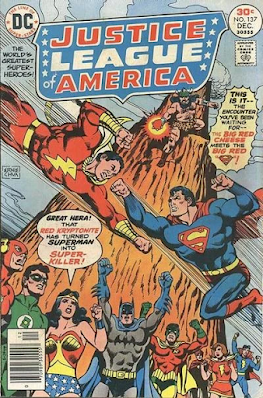
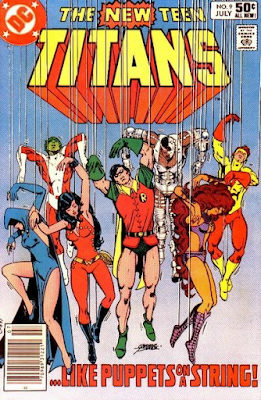
JC: Let’s see… the earliest DC Comics I can remember holding in my hands -- and reading over and over -- were Justice League of America #137, All-Star Comics #63 and Secret Society of Super-Villains #3. I have no doubt that my folks bought all three of them for me, because I was just a grade school scrub. Y’know, when I stop and think about it… those three comics really just sum me right up, in terms of my formative tastes. But the first one I remember actually buying on my own would have to be New Teen Titans #9. As a matter of fact, I didn’t even purchase it when I first saw it. I spotted it on the stands at the first Direct Market retailer I ever knew of (Walt’s Paperback Books in Nashville, TN). That classic George Perez cover, with all of the Titans hanging by marionette strings… after I got home, I couldn’t get it out of my head. It just haunted me. I even tried to redraw that cover from memory. So, clearly, I had no choice but to go back and buy that comic book. Once I read it, I was instantly hooked… and I was no longer exclusively a Marvel kid reader. 

2. What were your favorite DC comics runs in the 1980s?

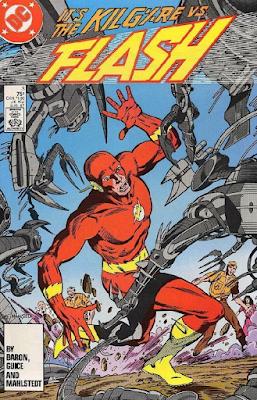
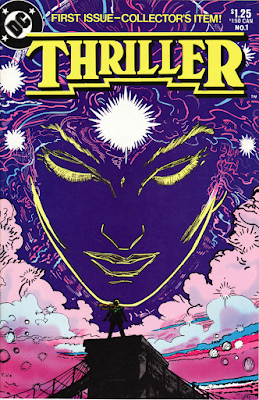
JC: There was a helluva lot to love during that decade. The Baron/Guice Flash (not to mention their two-issue Hawk story in Teen Titans Spotlight), the first two years of the Giffen/DeMatteis/Maguire Justice League, the Wolfman/Perez New Teen Titans, Fleming and Von Eeden’s Thriller, the Ostrander/McDonnell Suicide Squad, the Kupperburg/Lightle/Larsen Doom Patrol, the Giffen 5YL Legion, the Helfer/Sienkiewicz/Baker Shadow, Chaykin’s Blackhawk, Miller’s Batman work, Alan Moore on Swamp Thing


3. If you could go back in time and write for DC comics in the 1980s, what comic would you like to do? It can be anything you want, a re-boot, or taking over a book.

JC: Listen, I tried to write for DC Comics in 1987! I had the balls to send the great Dick Giordano a Batman fill-in script that I wrote on spec when I was just a punk teenager. Got a very encouraging, handwritten note back from Dick, which I still cherish. But to answer your question… to this day, I would’ve killed to take over for Mike Baron when he made -- in my humble opinion -- his all-too-early departure from Flash. Other than that, maybe DeMatteis’ gig dialoguing the Justice League books. 


4. Tell me all your thoughts on Jack Kirby, the Fourth World, and what that might mean to you?

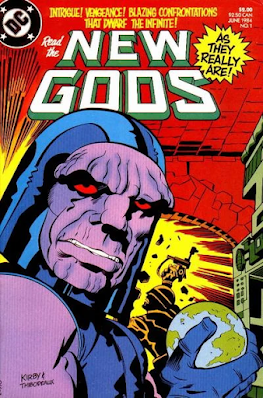
JC: I have no doubt that Kirby is an influence on anyone who works in superhero comics. Even if he’s not a direct influence, believe me, he’s in there. He’s always been there for me. But I was actually first introduced to the Fourth World characters in the Secret Society of Super-Villains series and then the JLA/JSA/New Gods crossover in Justice League of America #183-185. From there, I eventually inhaled the pure power of the deluxe Baxter reprints of New Gods and I never looked back. At that point, most of those original back issues were still somewhat getable, so I got as many of them as I could afford. And here’s an exclusive tease… that Fourth World material means a lot more to me now than it ever has, for very practical, career-related reasons.

5. Your first DC work was on Superman and the Flash. How did the 1980's runs on those characters affect your runs on those books?

JC: The first Superman comics I even cared about were written by Alan Moore -- the annual with Dave Gibbons and the two “finale” issues of Superman and Action. After that, I was definitely caught up in the excitement of the Byrne revamp. Some of those Byrne/Wolfman/Ordway issues definitely had an impact on my own work, especially when I spent my three years plus on Adventures of Superman. And I can tell you I was damn proud to be writing what I considered the “legacy” title. As for the Flash… well, from my previous answers, it should be obvious to one and all that I have an unhealthy, unconditional love for Mike Baron’s Flash relaunch. I can’t even tell you exactly why it hit me so hard when it first came out… or why it still sticks with me. I was already a big Baron fan from Nexus and Badger and his other indie work. And while I’d read random issues of the Barry Allen Flash series over the few years previous, it was never a must-buy for me. But the Baron relaunch, for the age that I was at the time, just seemed so modern, so cutting edge. Not that it was particularly groundbreaking comics (it wasn’t)… not that I didn’t bump on the differences between the Wally West I knew from New Teen Titans and Baron’s take (I did)… but it had a certain vibe and a narrative voice that just spoke to me. Props to editor Mike Gold (my absolute favorite DC editor of that period), who encouraged Baron to abandon just about everything that was associated with the previous Flash, including his famous Rogues Gallery, which seems inconceivable now. So it's much more than an influence… it’s literally embedded in my DNA as a writer.    

6. How did your admiration of DC in the 80's inspire your work on some of your most popular books/runs/creations; Wildcats, Automatic Kafka (<3), and Ben 10?

JC: You can draw a direct line from any of my “experimental” work straight back to the DC that published Thriller, Swamp Thing, Ambush Bug, Ronin, The Shadow, Dark Knight Returns, Animal Man, Black Orchid, Watchmen, Chaykin’s Blackhawk, Giffen’s 5YL Legion of Super-Heroes and other comics that definitely pushed the envelope when it came to “mainstream” comics. When I broke in as a full-time professional, I made it a personal mission to try and evoke the vibe of those 80’s comics in the ones that I wrote. 

7. Who were some of your favorite writers from the 1980s?

JC: David Michelinie, Mike Baron, Matt Wagner, Howard Chaykin, John Ostrander, Robert Loren Fleming, Keith Giffen, Steve Englehart, Walt Simonson, Frank Miller, Alan Moore. 


8. And subsequently, who were some of your favorite artists?

JC: Paul Smith, George Perez, Alan Davis, Trevor Von Eeden, David Mazzuchelli, Jackson Guice, Luke McDonnell, Howard Chaykin, Gene Day, Dave Stevens, John Romita Jr., Kyle Baker, Todd McFarlane, Kevin Maguire, Bart Sears, Paul Chadwick, Bernie Mireault, Frank Miller, Steve Rude, Erik Larsen, Ty Templeton, Dave Gibbons, Walt Simonson, Matt Wagner, Bill Sienkiewicz, Bob Layton, John Byrne, Keith Giffen, John Totleben, Brian Bolland. 


9. If you could pick any DC comic to do a Crisis crossover issue with, from that time, what comic would it have been?

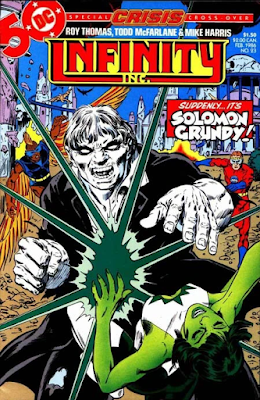
JC: Jeezus… y’know, I’m gonna say Infinity, Inc. Because history has shown us that Roy Thomas wasn’t too crazy about Crisis in the first place. So maybe I’d be doing him a favor, because I would definitely be into it. Plus, there’s a good chance it would’ve been drawn by Todd McFarlane during his wacky page design phase. But, to be honest, as much as I love the original Crisis (and I do), it was Legends that really connected with me. 

9b. How about Legends crossovers?

JC: If I had to choose, I think the BLUE BEETLE series could've been better served using LEGENDS as a way to push that series more into the spotlight. Not that I didn't read and love what Len and Paris were doing... but it was a bit too old school and the character was featured in LEGENDS to such a degree that maybe his series could've taken better advantage of the particular energy that was in the air in late '86/early '87.


10. What character who was big in the 80's, that may be forgotten, deserves some shine today?

JC: A few years ago, I would’ve easily answered, “Wally West”. But DC has taken some steps recently to rehabilitate the character. So that leaves only one answer for me: Thriller. The concept, the characters… it’s all so cool. A seminal book for me. God forbid DC collect the Fleming/Von Eeden issues, at least…!


DC in the 80's wants to thank Joe Casey for such a great interview! When we asked Joe if we could promote anything for him, he said "I think the most fun thing you could mention as "promotion" goes is that I've got some pretty big DC plans over the next few years. And i do mean BIG." WOW! That sounds exciting. Can't wait to find out what it is. Until next time. 

Tuesday, February 9, 2021

DC in the 80's Talks to Tom Scioli About His Brilliant Jack Kirby Comic

Comics would not exist as we know them today if Jack Kirby hadn't done what he did. Maybe there would have been some form of comic books, but Jack Kirby contributed immensely to the mythology of superhero comics in the forties, sixties, seventies and still into the eighties. The DC comics of the eighties used so much of what he created and even wove it into the fabric of the DC Universe (ex: Mister Miracle and Big Barda in Justice League International, Darkseid, Apokolips, and the New Gods in SupermanEtrigan the Demon in Swamp Thing, Kamandi in the Crisis on Infinite Earths, and the New Gods/Apokolips characters who appear in Kenner's Super Powers Collection toy line.)  

New Gods Mister Miracle and Metron in Justice League International.

One of Jack Kirby's biggest fans is Tom Scioli, who put together an AMAZING illustrated biography of the King, which is available right now. You can also find some of his work in the Super Powers backup story in Gerard Way's Cave Carson Has a Cybernetic Eye, published from 2016 to 2017 by the DC Comic's imprint Young Animal.  

One of the best illustrated biographies ever.


Mark Belkin asked Tom Scioli if we could ask him five questions about the book, and he obliged! Without further ado, here is our socially distant interview about his amazing Jack Kirby: The Epic Life of the King of Comics

--------

Mark Belkin: Question #1What was the first Jack Kirby book you ever read? How did it make you feel after reading it?

Tom Scioli: Thor Treasury with the Mangog story. I loved it. I felt smarter just for reading it with all the 'thees' and 'thous' and the 'billion, billion beings'. It was thrilling. I assumed it was business as usual. I hadn’t read very many comics at that point and I assumed that most comics were that good.

Action!!!

Mark: Question #2: If you could travel back in time and be the boss of any of the comic companies Jack Kirby worked for, what's one thing you would absolutely change in how he was treated?

Tom: Profit participation and creative control. That’s all he was asking for. If he were writing novels instead of making comics, it would’ve been standard.


Mark: Question #3: Of all of Kirby's DC creations after leaving Marvel, which was your favorite?

Tom: I love New Gods. I was fascinated with Darkseid when I first saw him on the Super Powers show. When I later learned that he had a son other than Kalibak who was the main character of a whole other super hero mythology I was blown away. Orion is such an amazing character and he flies under the radar.

The 80's reprints of the New God's series, with some additional parts.


Mark: Question #4: How was it working on your Super Powers back up in Young Animal? What did you read or look at to prepare for it? Did you ever collect the action figures, and if you did, which was your favorite?

Tom: I looked at all sorts of stuff. The cartoon, the old comics. Kirby’s super powers and Ramona Fradon’s SuperFriends comics. When I was told I wouldn’t have access to the new gods or the JLA/Super Friends, I started digging deep into obscure Kirby DC stuff like In The Days of the Mob and his 50’s stuff. I loved the action figures. I was excited when those and the Marvel Secret Wars toys came out. Prior to that there was just the mego super hero’s which seemed old fashioned. It was cool having Star Wars figure sized super hero toys. My favorite was Superman. I got the Lexor 7 mainly for the kryptonite.

The King in all his glory.

----------------------------

Tom Scioli's Super Power's backup. 


Mark: Question #5: There was so much emotion in your Jack Kirby book. From his time in World War 2, to his relationship with Roz Kirby, to how he was treated by major publishers (i.e., inkers, editors, night time hosts, etc...) Obviously you have a love and admiration for Jack. Was there any part of the story where you felt "This is really hard to read about and illustrate!"?

Tom: All the stuff you named. I really wanted to get it right. His illness and death were emotionally challenging for me to write and illustrate.

Mark: Thank you for talking with us, Tom!

----

I highly recommend the Jack Kirby book. I learned so much I did not know, and it made me cry a few times. It's powerful work about a powerful man. You can order it directly at:

https://www.penguinrandomhouse.com/books/608042/jack-kirby-by-tom-scioli/?pdivflag

Tom Scioli has a lot of great work that he has done over the years (I am particularly partial to Godland and Transformers vs. G.I. Joe). You can find him on:

Twitter @tomscioli

Instagram @tom_scioli

His Patreon link: https://www.patreon.com/user?u=44878299

His websites: tomscioli.com and ambarb.com

His YouTube channel, which is called 'Total Recall Show': https://www.youtube.com/channel/UC06b4W-wdvMDkilT-hAVxmQ


 More Tom Scioli Super Powers!

Friday, August 16, 2019

SBTU Immortal: Forager -- The Second Life of a Bug

This round of Super Blog Team Up is about characters who never seem to die... or rather, die and come back to life. Now, the obvious choice (if you're a DC comics blog) is to discuss the Death of Superman event, or maybe Jason Todd coming back as the Red Hood, or possibly even the Spectre, Deadman or Resurrection Man. Actually, I'm sure if I looked hard enough, I could find a whole slew of DC characters who have 'died' only to come back several issues later.

However, since I've had a copy of Young Animal's Bug! The Adventures of Forager v1 TPB sitting on my desk next to me for the last 2 months and, since I was planning on reviewing it anyways, I've decided to make Forager the character I'm spotlighting. It's about working smart, people.

---

So, who is Forager? And why should you care?

Forager is part of Jack Kirby's Fourth World universe (along with Darkseid, Orion and Mister Miracle and all that other cool stuff) and first appeared in 1972's New Gods #9. He's a member of a society of humanoid bugs who live beneath the surface of New Genesis. It's quickly discovered that he's different from the other insectoids in his colony -- he has independent thoughts & feelings that differ from the colony's hive-mind and it's hinted that he may actually have New God lineage.

Panels from New Gods #9 (1972). Pencils by Jack Kirby, inks by Mike Royer.

On New Genesis, the 'bug people' are considered to be the lowest of the low, and are often being sprayed with pesticides by the New Gods. In reality, they kind of live like cockroaches, scavenging whatever they can for food while defending their colony from invading tribes. It's explained that during the first Great Clash between New Genesis and Apokolips, Apokolips' armies used germ warfare weapons to attack New Genesis and somehow created this race of bug people. I'm sure Jack Kirby was trying to make a statement here about the then-current early seventies, but for the life of me I just don't have the time to decipher it. It doesn't really matter, either way.

Forager's first mission outside the colony finds him teaming up with Orion and Lightray to prevent Mantis (and the army of bug people he recruited) from invading earth.

Something that kinda catches me off guard is that Forager has a human face. I was expecting him to have an insectoid face of some sort:

Panels from New Gods #10 (1972). Pencils by Jack Kirby, inks by Mike Royer.

After his initial team-up with Orion and Lightray in issues #9 - 10 of Jack Kirby's New Gods, Forager had been relegated to Bit Character status during Gerry Conway's run of New Gods (aka: Return of the New Gods). Since Kirby left DC after issue #11 of the New Gods, it's difficult to guess what he had planned for Forager. Was he meant to become a regular cast member of the Fourth World saga? Or simply a one-and-done? Your guess is as good as mine.

Forager seems to have gone into 'comic book limbo' during the eighties, but eventually made a quick appearance in 1987's Warlord Annual #6.

Forager's last, and arguably most notable, adventure during that decade occurred in 1988's Cosmic Odyssey. Written by Jim Starlin (Thanos Quest, Infinity Gauntlet) and pencilled by Mike Mignola (Batman: Gotham by Gaslight, Hellboy),  Cosmic Odyssey was a four-issue prestige mini-series teaming a few of the DCU's big name heroes (Superman, Batman, Martian Manhunter, Starfire, Green Lantern) with a few of the New Gods (Orion, Lightray, Forager) to stop the Anti-Life Entity from destroying existence (or something equally catastrophic). In my opinion, Cosmic Odyssey was one of the BEST things to come out of 1988 -- but we'll get into that some other time.

Starlin's decision to include a lesser-known New Gods character didn't really seem out of place -- the Fourth World was making a comeback, so it only made sense to start re-introducing tertiary characters. Forager is paired with Batman, and the two are tasked with tracking down an aspect of the Anti-Life Entity on earth. Starlin takes great care to reintroduce the reader to Forager, going so far as to recap his relationship with Orion -- which, admittedly, was handy for us who weren't reading New Gods comics in the early seventies.

panels from Cosmic Odyssey #2 (1988). Art by Mike Mignola, inks by Carlos Garzon 

Like most epic DC events, something earth-shattering needs to happen that will forever change the status quo. In Cosmic Odyssey, Green Lantern John Stewart accidentally lets a star system get destroyed, and Forager sacrifices himself to save the earth:

page from Cosmic Odyssey #4 (1988). Art by Mike Mignola inks by Carlos Garzon 

Did Forager's death have an impact? Well, heroes altruistically throwing themselves into the line of fire to save the planet/universe seems to happen quite frequently in the DCU (see: Barry Allen Flash, Kara Zor-El, etc...), so that's kind of a moot point. Forager's death did reinforce the idea that Orion, the biological son of Darkseid, is a ruthless warmonger with no real regard to anyone who isn't a New God (which was kind of a sub-plot running throughout the mini-series).

I suppose his death wasn't in vain -- anything that makes Batman angry enough to take a swing at Orion to defend your honour is probably how you want to go out:

panels from Cosmic Odyssey #4 (1988). Art by Mike Mignola inks by Carlos Garzon 

Cosmic Odyssey concludes with Highfather instructing Orion to take Forager's body back to the bug colony of New Genesis. The story continues in 1989's New Gods v3 #1 with Orion delivering Forager's body and learning 'tolerance'. Most importantly, Forager stayed dead and wasn't re-introduced in a 'whoops, haha, here's what REALLY happened' type-of-deal several issues later. His death stuck.

How important was Forager to the New Gods mythos? Well... not very. The first major story arc in New Gods v3 introduced a *new* female Forager who picks up the mantle and becomes the bug people's new champion:

panel from New Gods v3 #2. pencilled by Paris Cullins, inked by Bob Lewis

Of all of Kirby's Fourth World characters, how much do I care about Forager? Well, on a scale of 1 to Darkseid (who I think is the best villain ever), I care about Forager a smidgen more than the Forever People (who rate about a zero), so figure that one out.

But I DO care about the Bug! The Adventures of Forager six issue mini-series because 1) it's a Young Animal imprint and 2) it's illustrated by Mike Allred -- who is easily one of my top 3 favourite artists. As you may have picked up on some of my previous posts, I am a shameless Young Animal fan and feel that it carries the 'DC with an edge' spirit that the publisher has been lacking for the last -- oh I don't know -- half decade or so. I've been a Mike Allred fan since his Madman comics from the early nineties, think his 2001 X-Force collab with Peter Milligan was one of the best X-titles I've ever read, and really felt that he and Dan Slott renewed my interest in Silver Surfer after reading volumes 7 & 8 (2016 - 2018).

I'd compare Allred's art to 50s/60s pop art: clean strong lines, no hard edges, not overly detailed, vibrant colors, with lots of activity and fluidity in his pages. His comic book characters resemble comic book characters, none of this 'photo-realism' stuff. In a way, Allred's art reminds me of Jack Kirby's -- which makes him a perfect fit to tackle a Kirby-created character.


cover of Bug! The Adventures of Forager #1 illustrated by Mike Allred.

While I don't think any DC comics fans were banging down the doors demanding a Forager revival, astute readers may remember that Mike Allred wrote and illustrated a 2-page New Gods story back in 2004's Solo #7. Forager was visible, alive and well in this story. Was it foreshadowing? Nah, I think it was just Mike having fun -- nothing that happened in Solo appears to be cannon, but it may have brought attention to the fact that Mike likes these characters and would do a great job with them.

panel from Solo #7 (2004). Illustrated by Mike Allred.

There was no doubt in my mind that I was going to love the art in this book, the real question was if (writer) Lee Allred could make me care about this character by the end of this mini? …or at least write something entertaining enough for me to want to come back for five more consecutive issues?

This is a review article, so I'm going to jump right in. Lee Allred starts the first issue of the mini-series with a strong first-page opening recapping Forager's history. He's pretty much re-iterating what happened in 1972's New Gods #9 and the final chapter of Cosmic Odyssey, which pretty much affirms that he's sticking to current DC continuity.

page from Bug! The Adventures of Forager #1 (2017). Art by Mike Allred.

Forager wakes up from a cocoon and it's up to him to piece together where he is and how he got there. The scene is quickly set and the main and secondary characters are quickly introduced. To my delight and surprise, Lee Allred manages to include Joe Simon and Jack Kirby's Sandman (Garrett Sanford), along with Brute and Glob, into this story. Sandman was a short-lived comic book character introduced in 1974 that lasted about half a dozen issues. He was pretty much shuffled off into comic book limbo after his series ended, and it was revealed in 1988's Infinity Inc. #50 that he committed suicide in a flashback. Suffice to say, I was not expecting to see him in this book.

panels from Bug! The Adventures of Forager #1 (2017). Art by Mike Allred.

Lee did his homework; he incorporates Sandman's magic whistle into the story, and even manages to include two of Sandman's original villains: General Electric and Doctor Spider.

If seeing Sandman in this story caught you off guard, you're in for a ton of surprises -- there are obscure guest stars galore in this mini: The Losers, Sandman (Wesley Dodds) and Sandy the Golden Boy, Blue Beetle (Dan Garret), Jack Kirby's Atlas, Deadman, Manhunter (Paul Kirk), OMAC and the Black Racer. Lee doesn't just add these characters for novelty value, he manages to effectively incorporate some of their mythos into the story (ex: OMAC's Brother Eye, Deadman's hook-hand killer, Atlas' Crystal Mountain, etc...). This demonstrates Lee's respect for the characters and their legacies, and is just gold for a fan like me who loves spotting references to obscure and long-forgotten DC characters.

panels from Bug! The Adventures of Forager #4 (2017). Art by Mike Allred.

The thousand dollar question is... how does Lee Allred handle the return of Forager? In short, he did a fantastic job. Lee takes advantage of the fact that we're never actually shown the complete story in 1989's New Gods v3 #1 -- we don't see what happens after Orion drops off Forager's body to his bug people. Lee makes clever use of this and other gaps in Forager's history and delivers a solution that makes sense and doesn't diminish anything that previous writers did with the character.

While Lee wove a pretty ambitious and intricate tale, a few things in this mini leave me wondering if they're going to 'stick' in the DCU or not (continuity-wise). For example, throughout the mini it is revealed that:

-Chagra, a Jack Kirby Atlas villain from the seventies, was actually just an imperfect copy of Metron (of the New Gods).
-There is an implied kinship between the New Gods' Mother Box and OMAC's Brother Eye (aka: 'Brother Box')
-Deadman actually did find his killer (aka: The Hook), he just mistook him for someone else due to an axis-flipping device called the Omphalos. (I'm sure Neal Adams would have an issue with this one.)

This six-issue mini, while entertaining to look at, reads like a Silver Age DC comic (ex: tons of guest stars, plenty of action, lots of jumps from different locales, never a dull moment) and had me hooked until the final chapter when it became so quasi-philosophical that I got confused and completely missed the bigger message of this book (if there was one). The big take-away from this mini is that I really want to see Mike Allred illustrate an All-Star Squadron or New Gods ongoing series, and I want Laura Allred to color it and Lee Allred to write it.

Between Lee Allred's scripting and Mike Allred's art, Forager is depicted as a limber, hip-talking, good-spirited protagonist who is just trying to do the right thing and discover his true purpose/identity along the way -- which pretty much describes Madman's character from the early nineties Dark Horse comics of the same name (see images below). I actually don't mind this, since Forager was more or less a blank canvas lacking any real personality going into this mini-series. Will I be wearing a Forager t-shirt anytime soon? Probably not, but keep this up and he could develop a cult-like following (similar to Madman).

panels from Bug! The Adventures of Forager #1 (2017). Art by Mike Allred.
page from Dark Horse's Madman Comics #9 (1995). Illustrated by Mike Allred.

Writer Lee Allred is a really cool cat and took the time to chat with us on twitter about his work. "My best guess regarding what Kirby meant with Forager is that he was telling an updated Mowgli* story (human raised by animals) (cf Tarzan) as a basic framework. (My own reading is that Kirby was pretty direct that Forager was an Eternal, not a Bug.) Kirby used the Mowgli framework as a hook to tell a deeper take on the seedy underbelly of New Genesis' up-till-then flawless utopia, much the same way Star Trek: The Original Series did with their floating cities vs. underground menials in 'The Cloud Minders' episode." When I asked why, of all the DC characters floating around in comic limbo, they decided to revisit Forager for a Young Animal mini-series, Mike Allred replied with: "Bug's New Gods debut was in the waiting room of our guitar teacher, James Ray, when we were kids. We could only visit it week after week until Lee talked him into giving it to us. It was a Holy Grail for us." That's the truncated version. Jeffrey Renaud, of CBR.com, conducted a really thorough interview with the Allred gang about the conception of this mini. Lee and Mike explain that they've been Forager fanatics since they were kids, and that they've always viewed Forager and his struggle as 'the heart and core of the Fourth World books'. Additionally, Mike felt that it was a shame that Forager was given the short straw and introduced in the seventies' New Gods series only to have it cancelled two issues later. It's a great interview, and you can read it here.


*Editor's note: Mowgli is the protagonist of Rudyard Kipling's The Jungle Book. You probably saw the Disney cartoon when you were younger.


This wraps up my Super Blog Team Up contribution and review of Young Animal's Bug! Adventures of Forager mini-series from 2017. It was a pleasure and an honor to be included in this edition of SBTU.

If you're interested in reading more articles about comic book characters who returned from the grave (or just don't die), written by comic fans who are just as passionate about the medium as I am, I'm including the links to the other SBTU members' articles below.

Justin F

---

Super Blog Team Up links:


Comic Reviews By Walt: TMNT and Highlander

The Superhero Satellite: Super-Blog Team-Up Presents IMMORTAL: Peter Loves Mary Jane

Comics Comics Comics Blog: Dr. Fate

Between The Pages Blog: Big Finish: Doctor Who’s Finest Regeneration

The Unspoken Decade: Archer and Armstrong

Black, White and Bronze: What Price Immortality? A Review of Red Nails

The Daily Rios: Arion The Immortal

Chris Is On Infinite Earths: Podcast Episode 26 - Resurrection Man 1997 & 2011

In My Not So Humble Opinion: It Came from the 1990s: Ivar the Timewalker

Vic Sage "...of the upcoming Pop Culture Retrorama site.": I am Legend

The Source Material Comics Podcast: Vampirella “Roses For The Dead”

Dave's Comic Heroes Blog: Multi-Man

Magazines and Monsters: Podcast episode - Kang/Immortus: Avengers-Kang: Time and Time Again TPB (Avengers 69-71, Avengers 267-269)

Radulich Broadcasting Network: TV PARTY TONIGHT - Jupiter Ascending commentary

Friday, April 14, 2017

Super Powers by Erik Tramontana

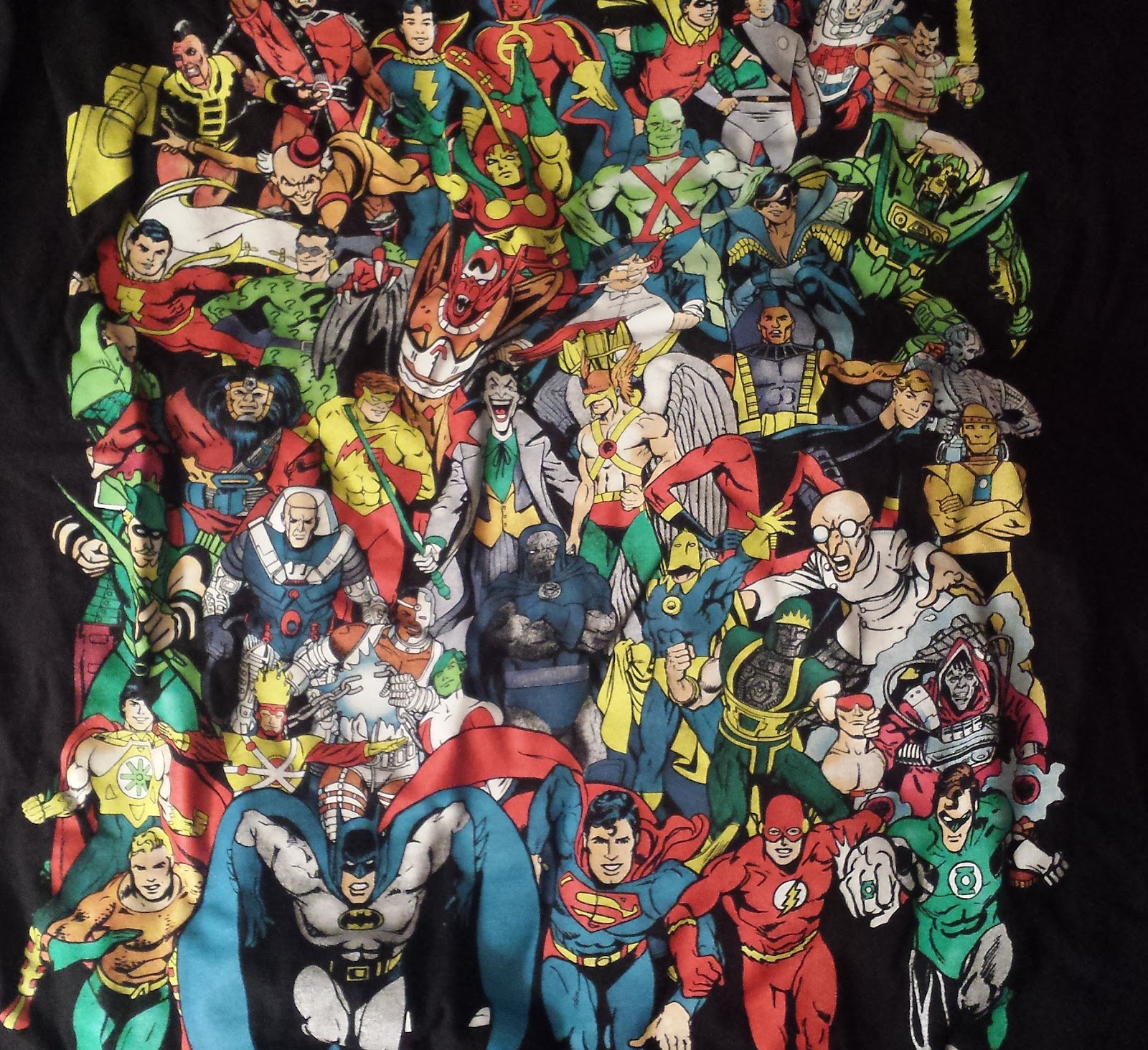
As everybody reading this website surely knows, the Super Powers Collection was an action figure line by Kenner, based on the Justice League of America comics. Super Powers merchandise was everywhere in the 1980s and still shows up today, like on this sick t-shirt I bought at Target:

Target Shirt.jpg
Dope t-shirt I got at Target

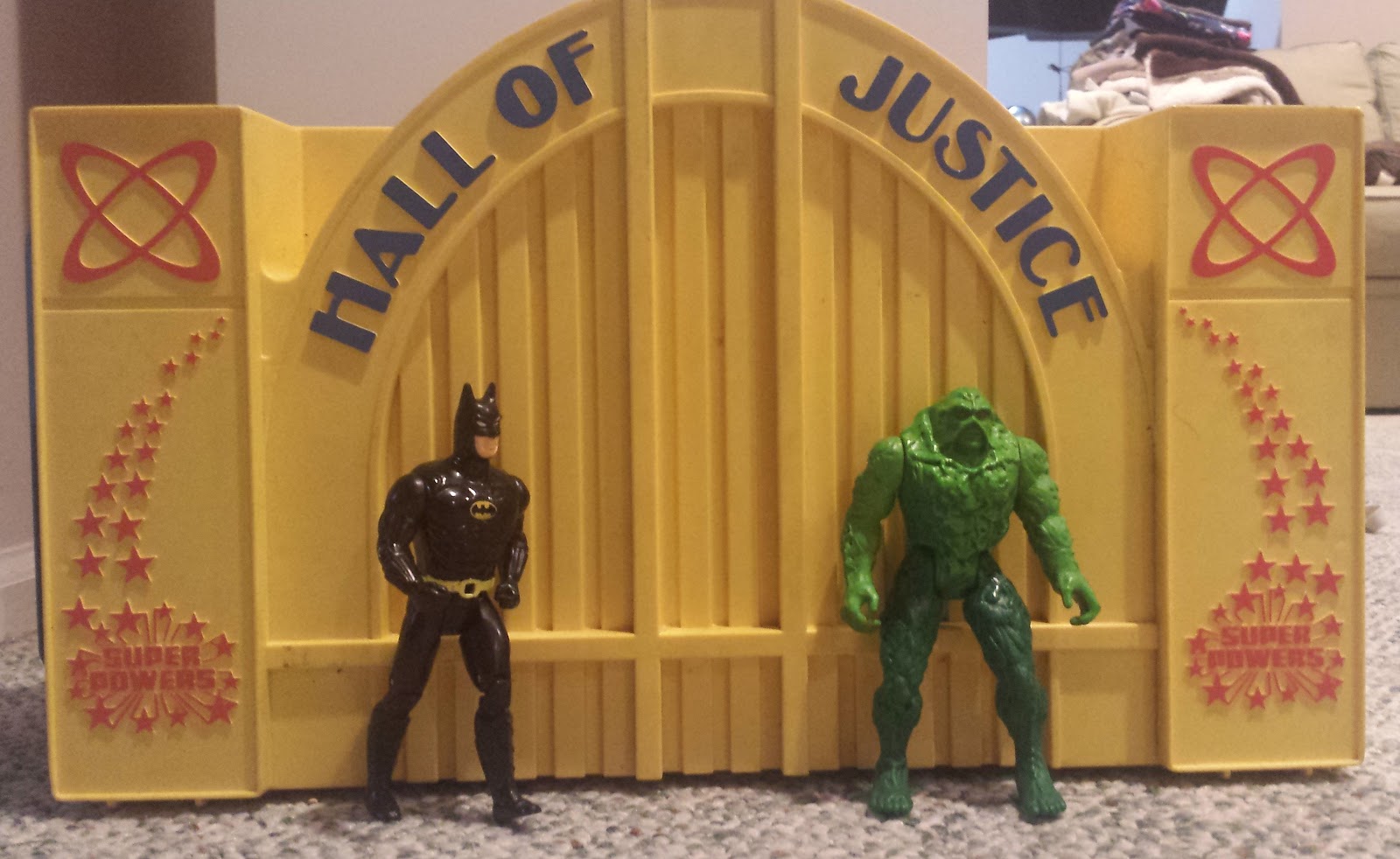
Even though I was a huge fan of the Super Friends TV show as a kid, I somehow missed out on the toys. Here is a picture of the Hall of Justice that I got at a yard sale for my kids, as modeled by Michael Keaton Batman and Swamp Thing:

Hall of Justice.jpg

"So, uh, you ever see Mr. Mom?"

But we don’t care about toys, t-shirts, or lunchboxes, we are here for the comics. And brother, were there ever comics!


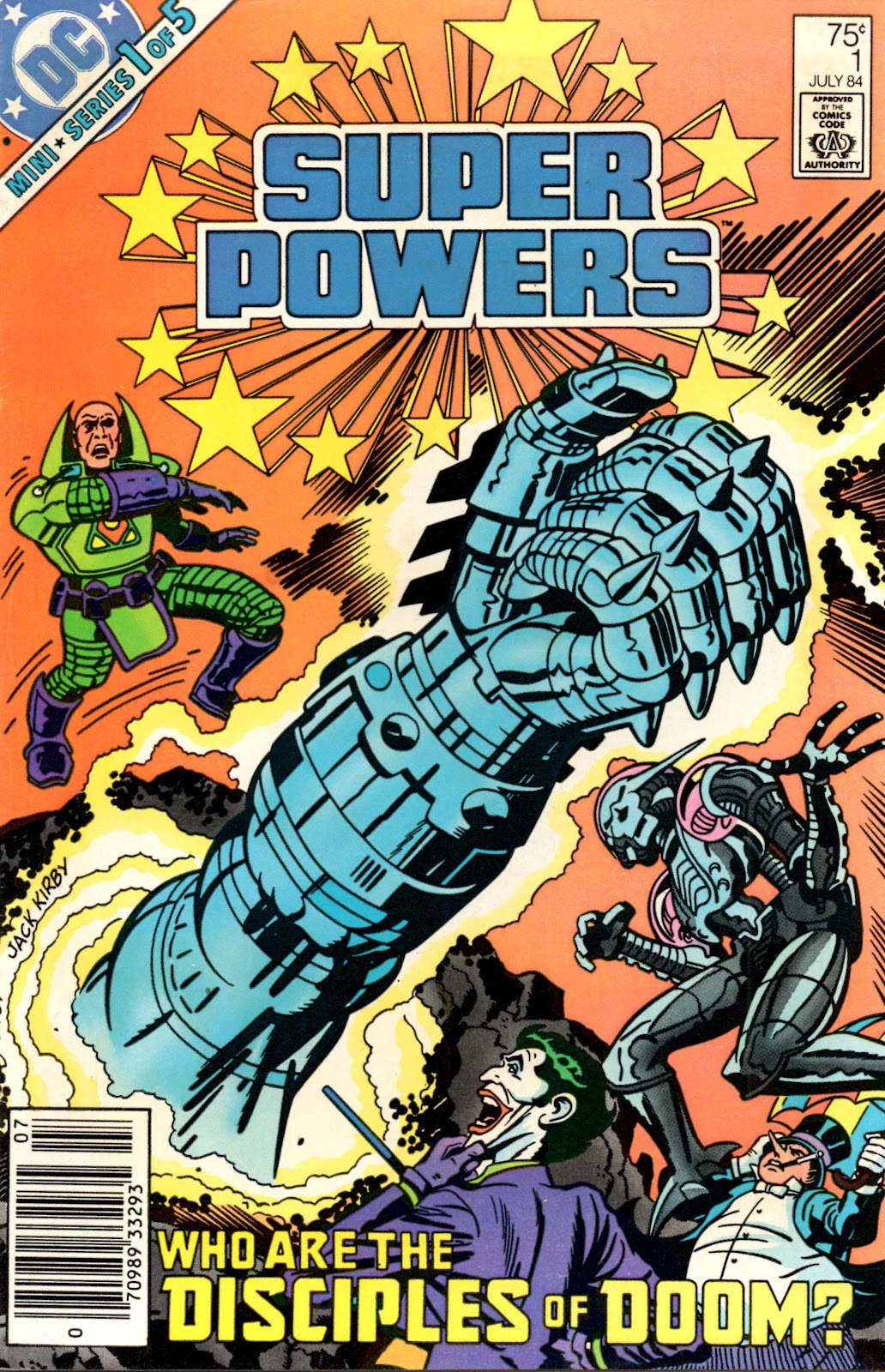
DC put out three series of Super Powers comic books between 1984 and 1986. The first series was plotted by Jack "The King" Kirby and scripted by Joey Caliveri, with Adrian Gonzalez pencils and Pablo Marcos on inks. Kirby also did the covers for this series, and both wrote and drew the concluding issue, #5.

Fist of Doom.jpg
Super Powers - Kirby on covers and plot

For a long time the Super Powers series was ignored by fans -- Kirby was past his prime, it was based on a toy line, it was "out of continuity" (more on this later). I bought nearly the entire run in quarter bins over the years and they never seemed to be in short supply. And, to be fair, the first series isn't really all that great.

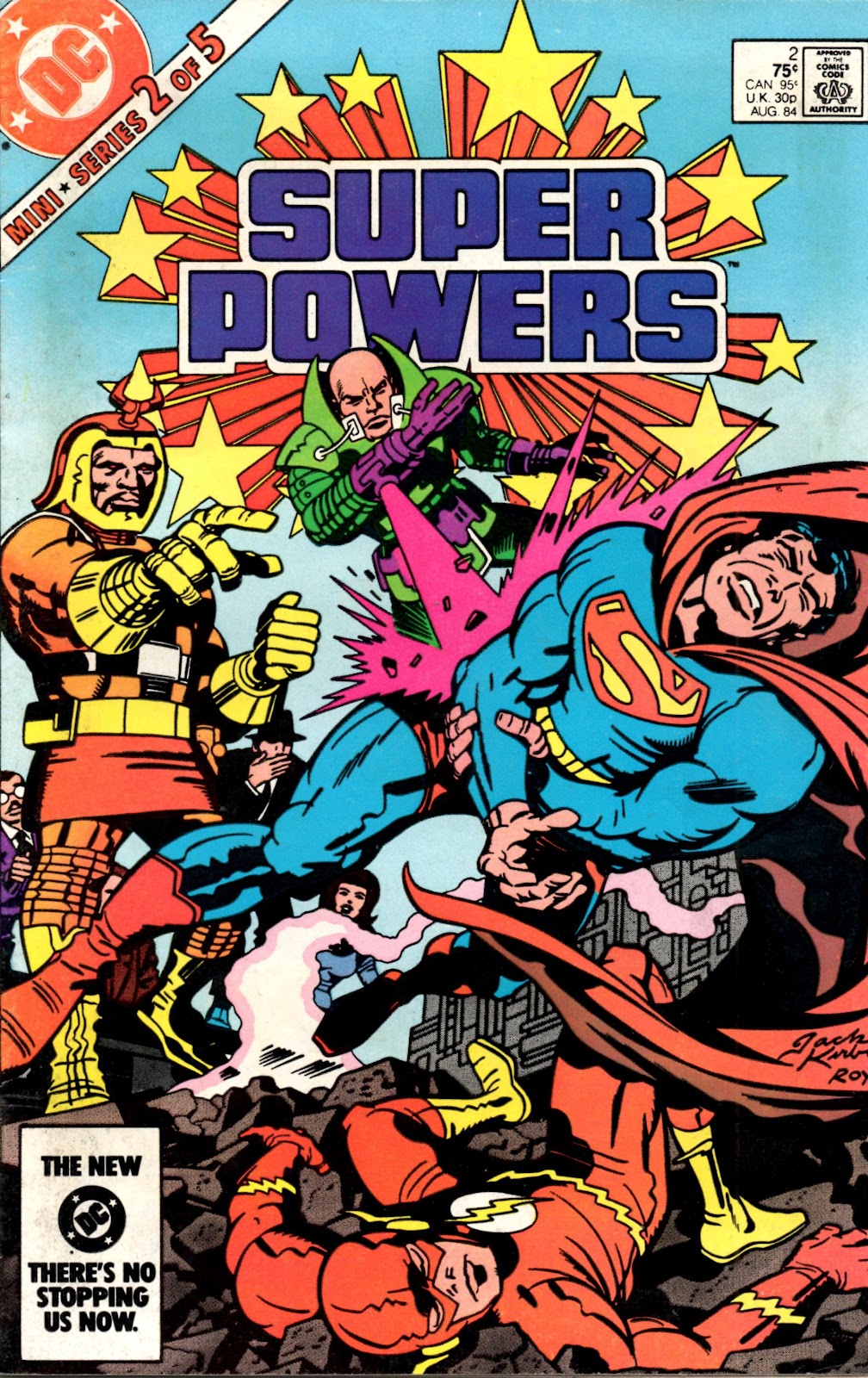
Darkseid grants great cosmic powers to the survivors of the gladiator games of Apokolips. These "Disciples of Doom" are sent to Earth to distract the superheroes while Darkseid’s armies take over the planet. The Disciples grant super powers to the world’s worst super-villains: Lex Luthor gets time distortion, The Penguin gets mind control, Brainiac receives the power to activate "racial memories" (yikes), while the Joker gets his own psychoactive dimension to play with. The newly-empowered villains pick fights with the superheroes (Hawkman, Superman, Green Lantern, The Flash, Aquaman, Wonder Woman, Batman and Robin) and lose badly.


Dead Superman Cover.jpg
Luthor using his brand new powers.


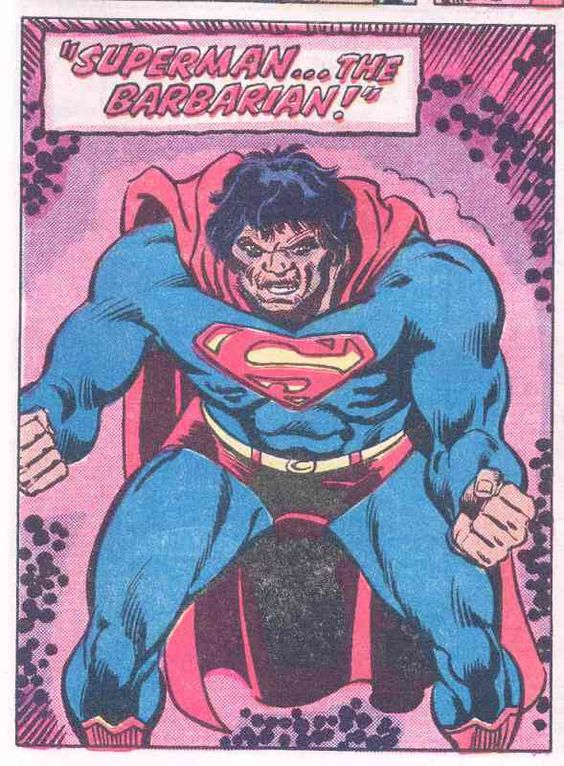
There are some good bits in this series, like Superman the Barbarian...


...and The Joker trapping Batman and Robin in a crazy-town dimension, but there is an awful lot of filler before we get to the main event in issue 5.

The concluding issue of the first series is raw, unfiltered Kirby and it undoubtedly blew some little kids' minds back in the day (Spaceship Earth -- We’re All On It!). Stranded in Apokolips, the Super Powers team touch a mysterious object that transports them to several bizarre worlds. The machine is "The Worlogog, a physical manifestation of time and space itself!". The Worlogog was built and controlled by Metron of the New Gods. Metron bounces the super guys around the dimensions to cover their tracks so Darkseid can't follow. Metron is going to use the Worlogog to boost the superheroes' abilities and wreck up Darkseid’s armies. Darkseid uses Boom Tubes to attack Earth at different points throughout history: Metropolis 80,000 AD, Ancient Asia, Atlantis...all defeated by Metron and the Worlogog. Metron sends the super-guys home in Brainiac’s ship, while Darkseid lives to scheme another day.

While it managed to transcend its origins as a toy tie-in at times, series 1 was just a warm up for Super Powers series 2, where things get really crazy. For the second series, Paul Kupperburg takes over as writer, while Kirby pencils and Greg Theakson inks. If you've ever wondered what a Jack Kirby JLA story would be like, you've come to the right place. This is the good stuff.

The first page has a footnote: "Takes place after The Hunger Dogs OGN". This is all the proof I need that this is 100% in New Gods continuity and therefore an official part of the Fourth World saga. After the events of The Hunger Dogs, Apokolips is no longer under Darkseid's rule and the huddled masses want to track down their former ruler and kill him. Darkseid kills some peasants and monologues that the universe will pay for this travesty. Darkseid meets up with Kalibak, Desaad, and Steppenwolf in an underground bunker. They take one last trip in a broken Boom Tube and leave Apokolips behind for good, setting down on Earth’s moon. Darkseid plans to get his mojo back by conquering Earth.

Meanwhile, at the Hall of Justice, Batman informs the Justice League that five "seeds" from outer space have landed in England, Rome, New York City, Easter Island, and the Arizona desert. These space seeds are burrowing into the planet’s core, which surely can’t be good. The League splits into teams, Gardner Fox style: Green Lantern, Dr. Fate, and Wonder Woman travel to Easter Island; Superman and Firestorm head to Rome; Red Tornado, Hawkman, and Green Arrow go to Times Square; Martian Manhunter and Aquaman travel to England; and Batman, Robin, and The Flash haul ass to the desert.

The heroes learn that the seeds are, in fact, evil, and when you so much as touch them they open up a time portal and whisk everyone back into the past. This leads to great bits like Martian Manhunter and Aquaman fighting the Knights of the Round Table, Wonder Woman and Dr. Fate accidentally creating the Easter Island statues (they’re aliens turned to stone! Oh Kirby), and Superman and Firestorm fighting Roman gladiators.

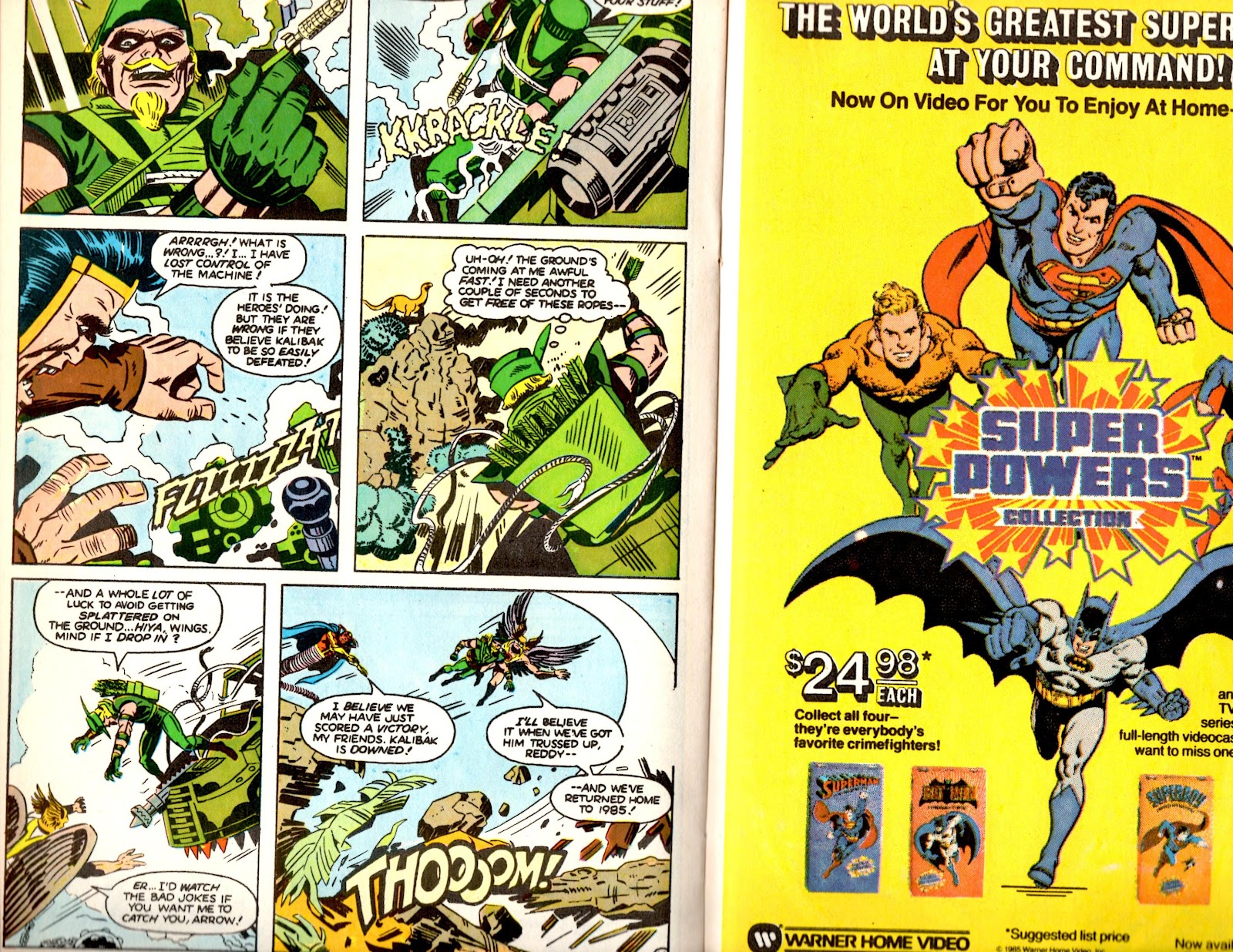
Video ad.jpg
Pretty expensive for a VHS tape!


One terrific bit has Kalibak strapping Green Arrow to the hood of the Boulder Bomber, which -- if you're going to do a toy commercial in your comic -- is absolutely the way to go.

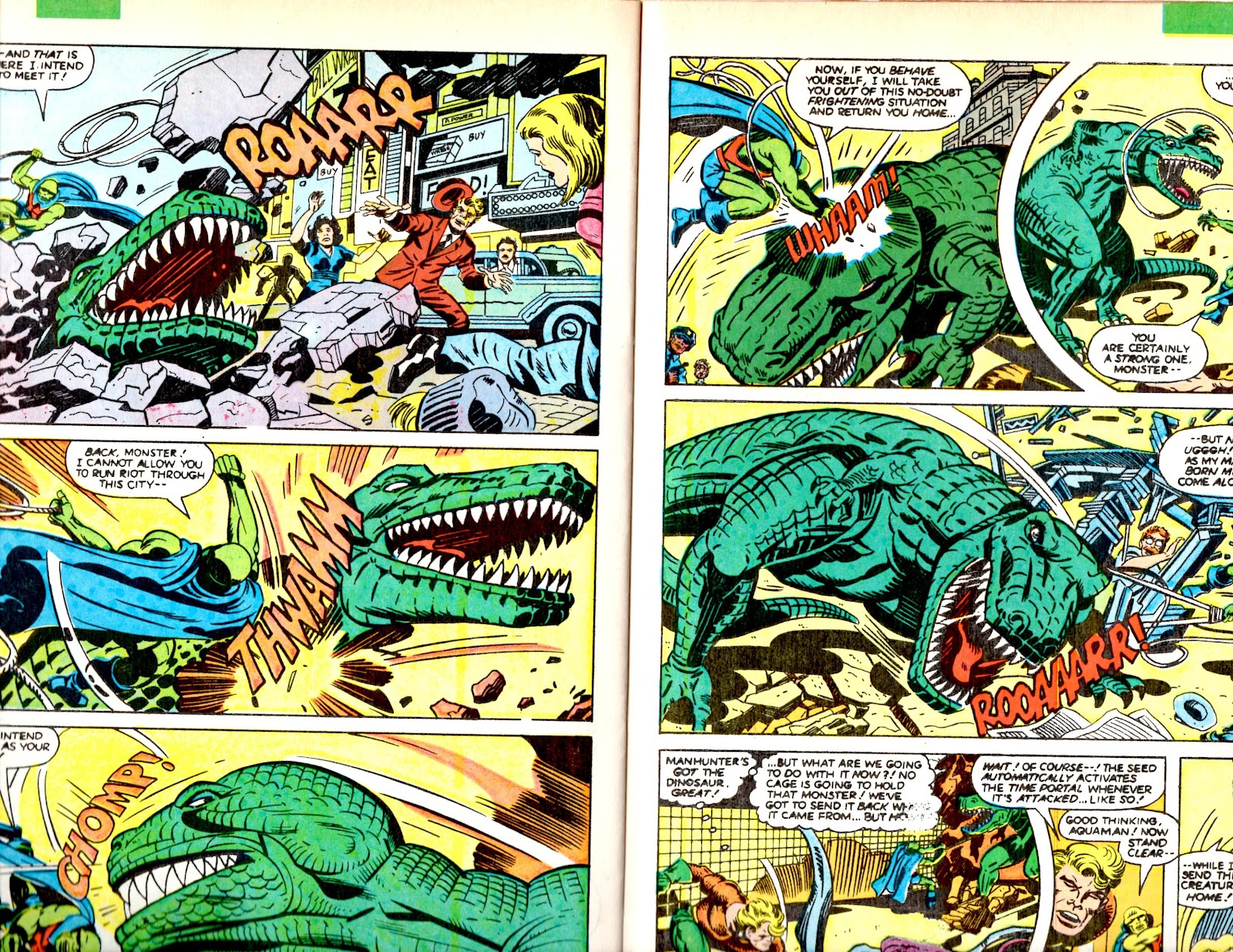
The two best parts in the whole series are undoubtedly the Times Square and Arizona chapters. I have an ironclad rule when it comes to purchasing comics: if there is a dinosaur or a Frankenstein on the cover then I MUST own it. Issue 2 features Martian Manhunter fighting a Tyrannosaurus in the middle of Times Square and it's the Devil Dinosaur sequel we never knew we wanted.

Mnhunter vs Dinosaur.jpg
If the Supergirl season finale doesn’t feature J’onn punching a T-Rex  I am never watching the CW again.


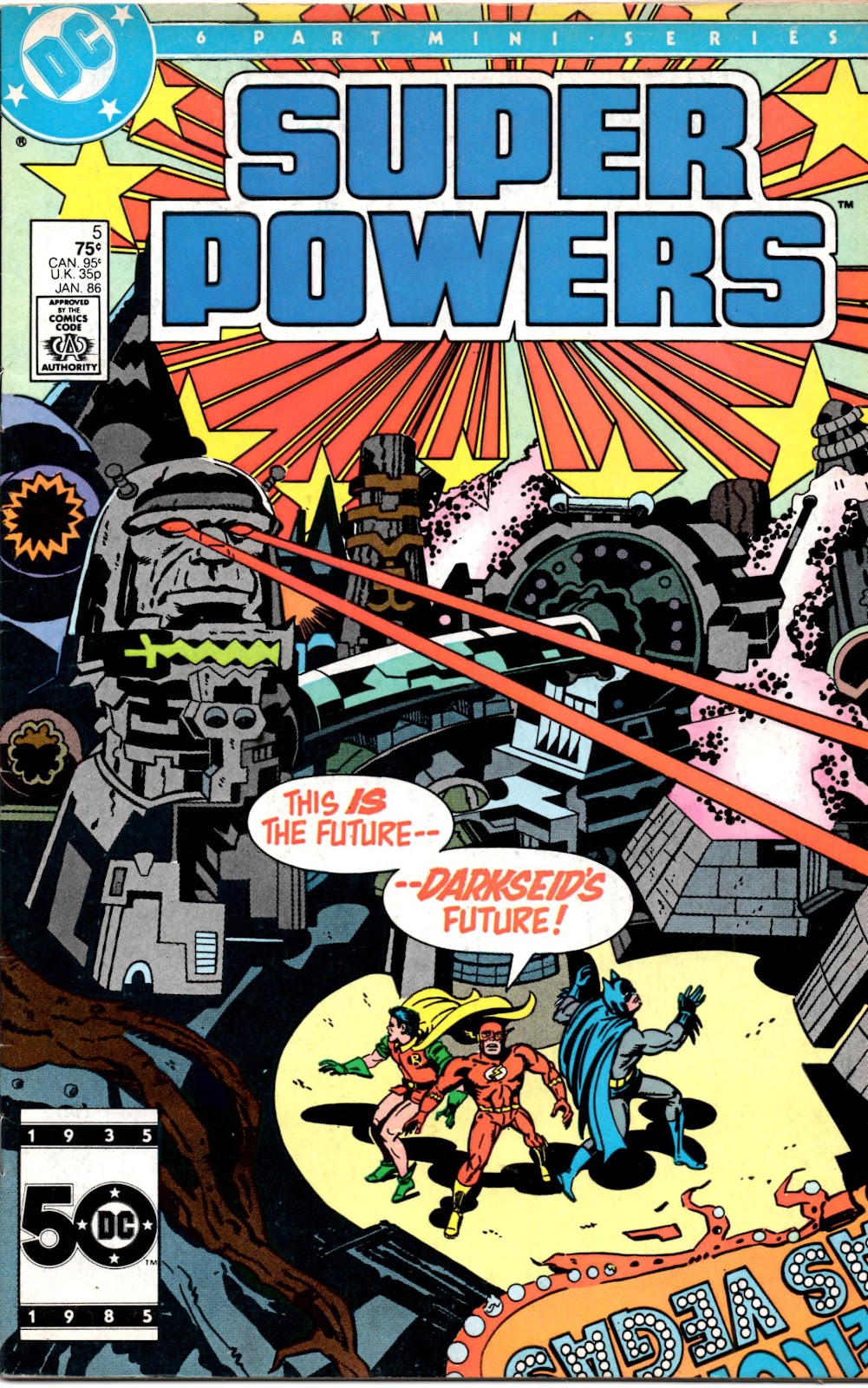
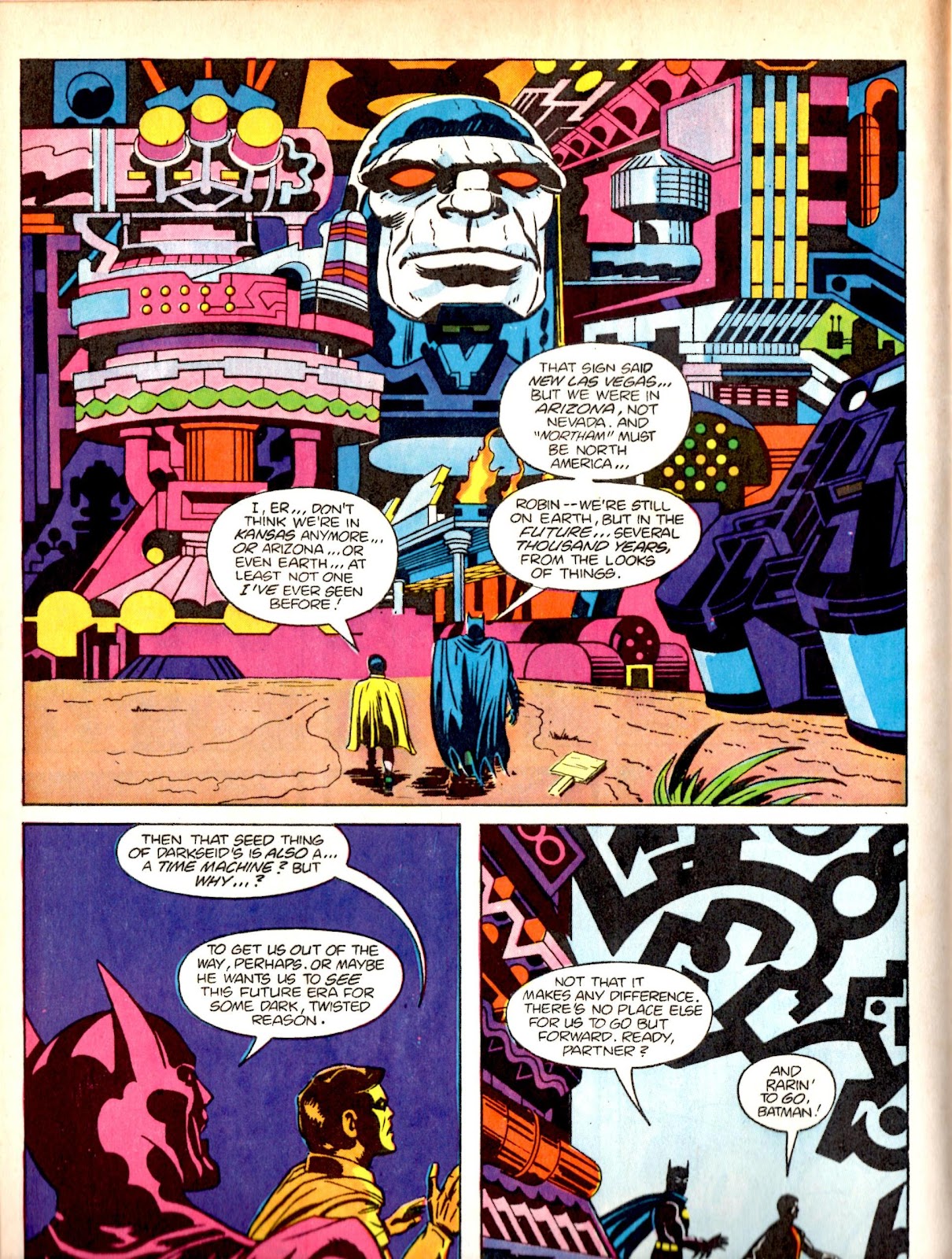
And then there is issue 5. If you ever wondered where Grant Morrison got the inspiration for Rock of Ages, look no further. In this issue, Batman hits the seed with a batarang and hordes of Parademons emerge from a time portal. The portal takes the heroes into a dark future where Darkseid has won and converted Earth into a new Apokolips. "New Las Vegas", in what used to be the Arizona desert, has become a shrine to Darkseid. If you have ever seen images from this series on Tumblr or Twitter or wherever, they are probably from this issue, because it is trippy as hell.


Darkseid Future.jpg
Rock of Ages trial run


Trippy Darkseid.jpg
Black light poster? Yes please.


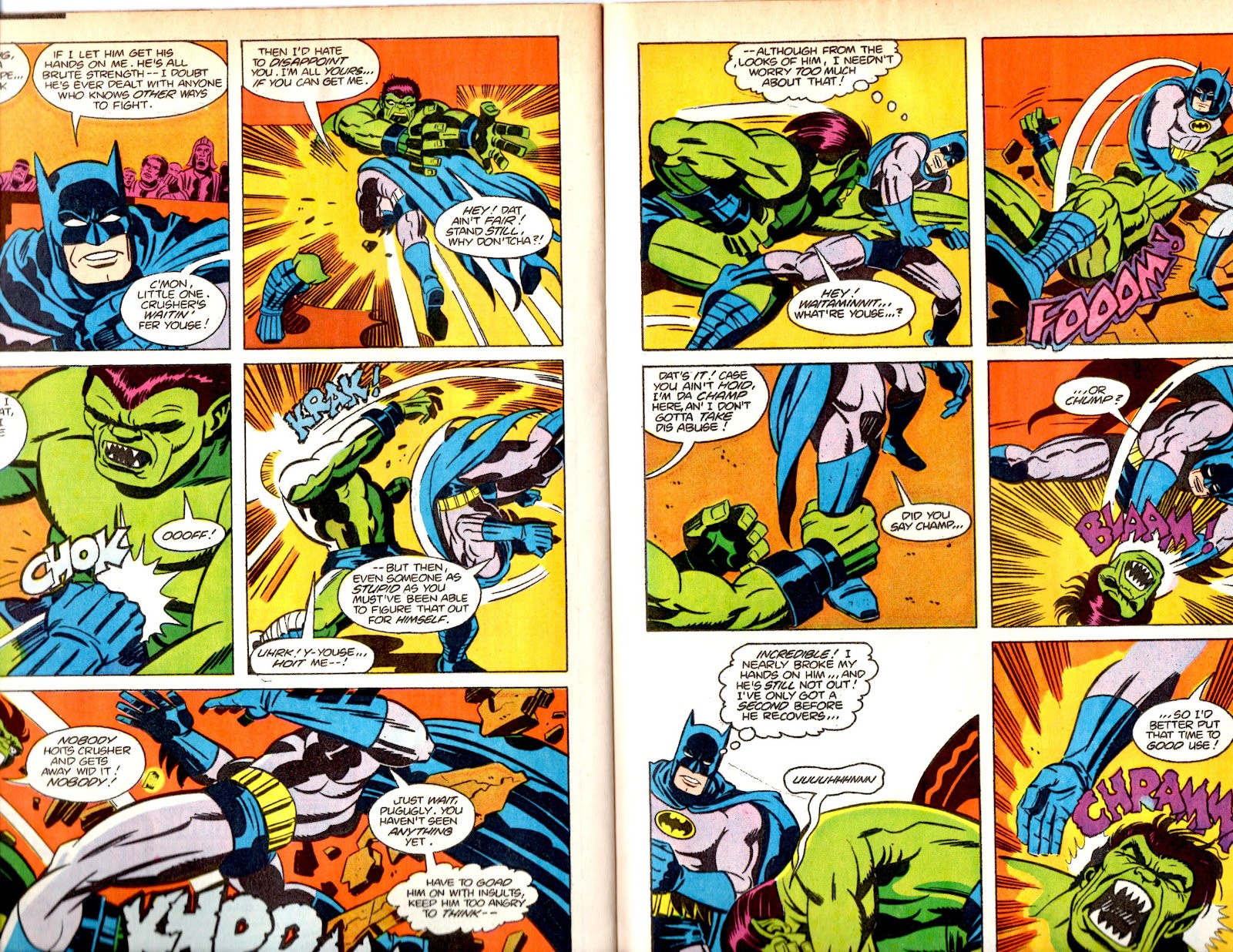
Civilians attack Batman and Robin for wearing forbidden superhero costumes and the Parademons take the heroes to the Arena, where they have to fight The Hulk -- I mean Mongo "Crusher" Monsoon.

Batman v Hulk.jpg

I wonder what would happen if Batman fought the Hulk and Jack Kirby drew it?


After defeating Crusher, the JLAers are about to be killed by Parademons when The Flash intercedes in the nick of time. They escape the arena, steal a time travel device, and get back to the past.

In the finale, issue 6, the superheroes handily defeat the henchmen and Parademons before tracking down Darkseid. A giant hologram Darkseid offers to make the heroes part of his chosen Elite Guard, but of course they refuse. The hologram hand shoots the good guys with an agonizing neural disruptor ray and traps them in a power-disrupting holding cell. Darkseid monologues that he is going to activate the seeds with an Omega Effect Amplifier and add their super powers into the mix. J’onn J’onnz shapeshifts himself into some kind of freaky non-sentient being without a central nervous system, allowing him to escape the pod and the neural disruptor ray. Once out J’onn is able to shift back to his normal form and free the others. Superman and Dr. Fate race to Earth to deflect the Omega beams, blocking them from making contact with the seeds. Desaad betrays Darkseid by sabotaging the machine. Darkseid disappears thanks to his own Omega Effect, while the other Apokoliptikans escape through the star gate. Earth is safe once again!

Proving you can’t keep a great concept down, Super Powers has seen a revival at DC this year. In addition to the Aw Yeah series for kids, Super Powers has come back as a backup strip in Cave Carson Has A Cybernetic Eye, part of the Gerard Way-led Young Animal line. Written and drawn by Tom Scioli, the auteur behind Transformers vs G.I.Joe, Super Powers uses the toyline and Jack Kirby comics as a jumping-off point for an idiosyncratic and offbeat take on the DC Universe.

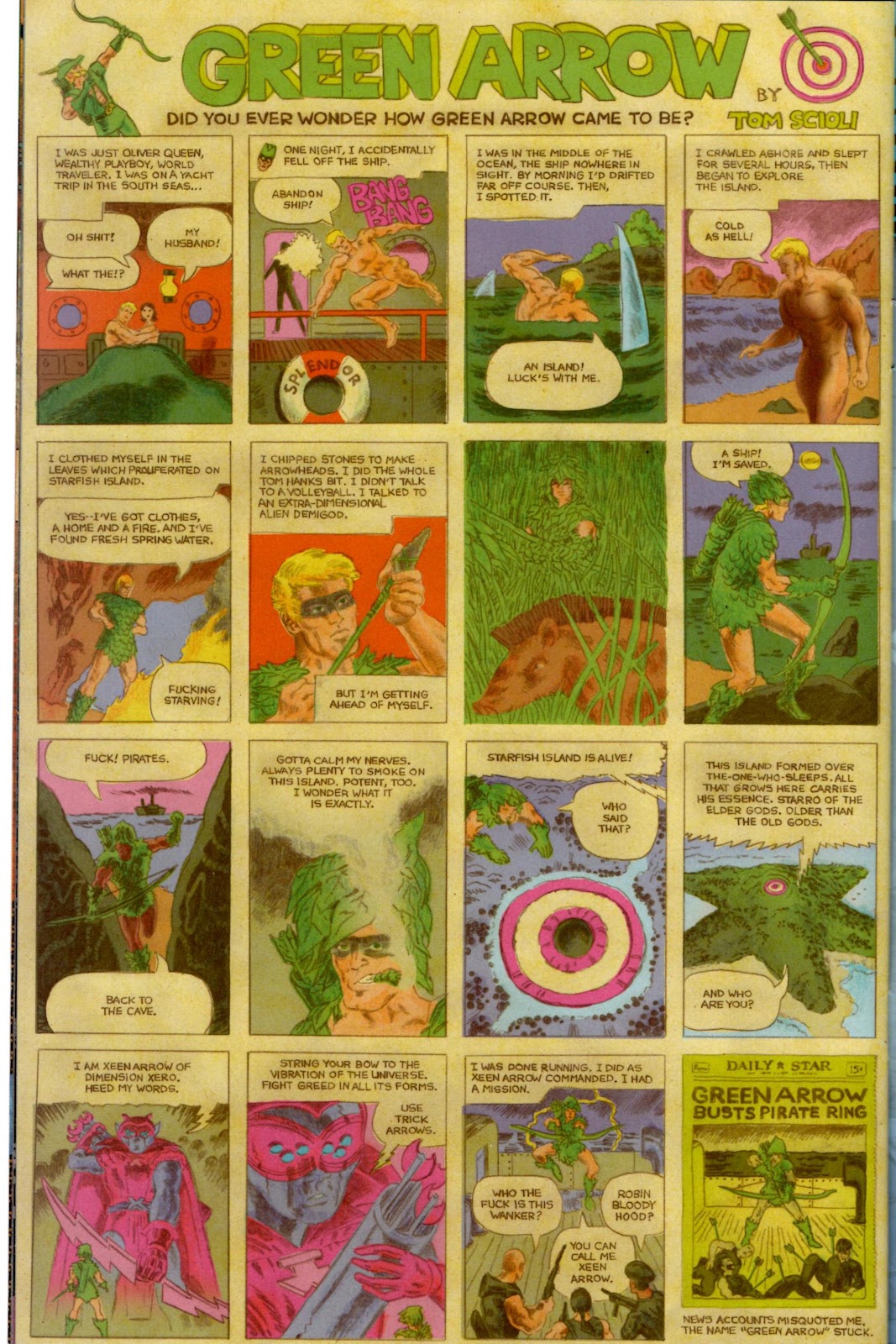
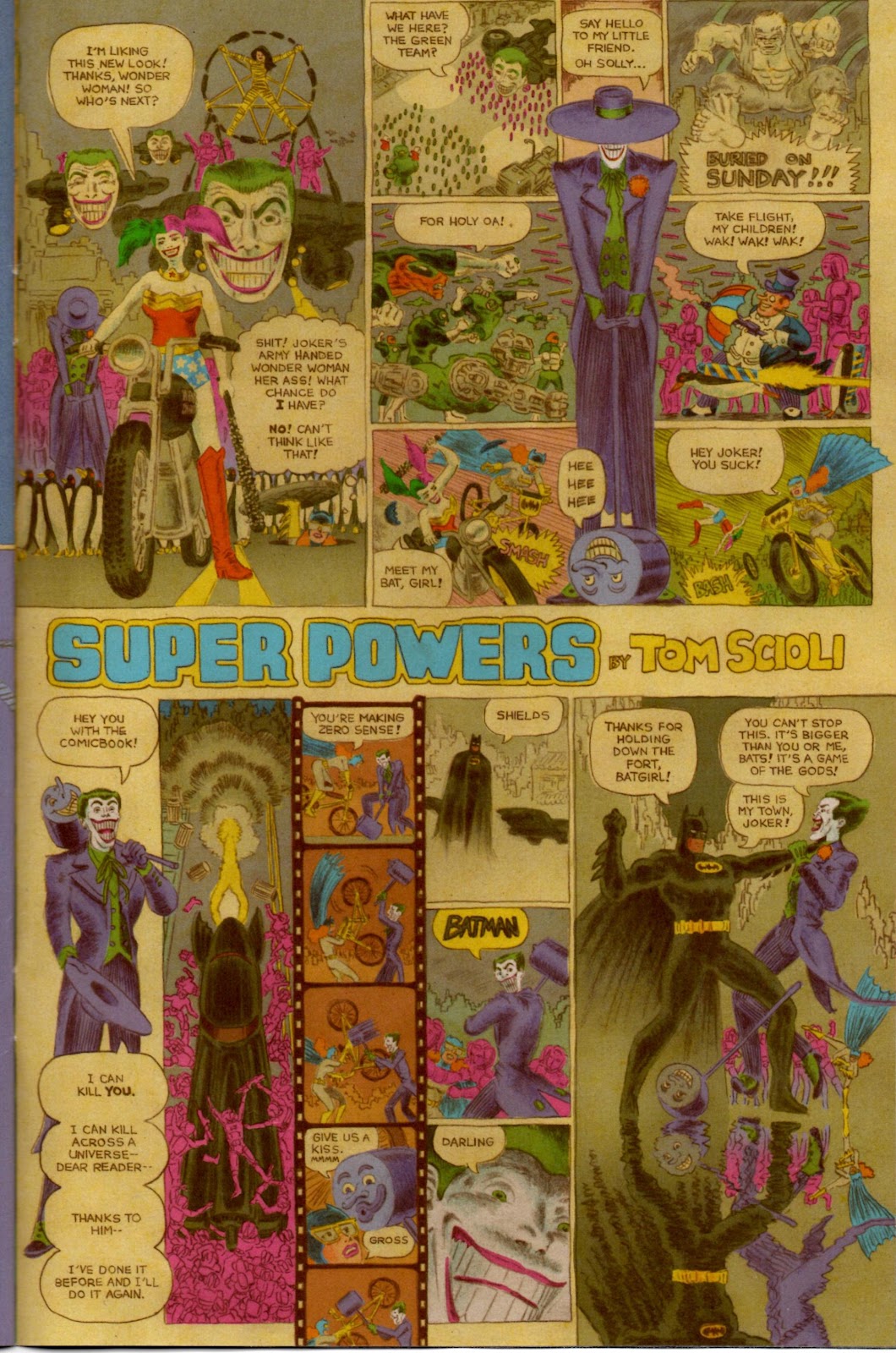
When taking notes for this write up, I spent three pages trying to summarize the plot, which is pretty impressive considering each installment is only two to three pages long. The series provides new origin stories for The Wonder Twins and Green Arrow, a look at Etrigan's past as an angel before the fall, a glimpse of Flippa Dippa’s future as an underwater archeologist with the Sea Devils, Captain Marvel Jr. crucified on the Rock of Eternity, an army of Superman clones, the arrival of The New Gods, and a Morrison-esque shattering of the fourth wall.

Arrow.jpg
Best Green Arrow origin.

I want to say more about the Scioli series (plot summary, spot-the-reference, theories, you name it), but it's still available and well worth reading on your own. On my blog JLA Classified I have gushed about the Young Animal imprint and called Cave Carson my favorite comic of 2017, and I think you will agree. If you are into 1980s DC and Vertigo comics (and I know you are!) then you owe it to yourself to check it out.

Batgirl.jpg
Batman 89 also Dark Knight and Killing Joke with a bit of Animal Man thrown in.

You can get both Kirby Super Powers series in the Kirby Omnibus cheap on Amazon, and Cave Carson Has A Cybernetic Eye is available wherever fine comic books are sold.

-Erik Tramontana


Erik Tramontana is a teacher, a dad, and a lifelong Batman fan. He blogs about 1990s DC comics at jlaclassified.tumblr.com


Wednesday, February 8, 2017

A brief overview of DC's Super Powers v1, v2 and v3 mini-series' from DC comics [1984 - 1986]

House ad for 1984 Super Powers mini-series


In 1984, DC comics published a 5 issue mini-series to accompany the Super Powers Collection toy line released by Kenner that same year. Written by Joey Cavalieri and illustrated by Adrian Gonzales (with inks from Pablo Marcos), the characters featured in this mini-series are coincidentally the 12 action figures released for the 1st wave of the toy line -- which leads me to believe that the main goal of this mini-series was to act as a cross-promotional strategy. [This makes sense since both G.I. Joe and Transformers were each tied in with a Marvel Comics title and their toy lines were both quite successful.]

DC comics ad for 1st wave of Super Powers Collection action figures.

This mini-series manages to tie a few pieces of silver-age DCU history into the storyline leading the reader to wonder if it's part of DC continuity (pre-Crisis). For example, several characters held onto their silver age origins, yet Lex Luthor and Brainiac were completely redesigned by George Pérez and Ed Hannigan for the toy line (as they appear in this mini-series). Additionally, certain elements of the Super Powers universe were "borrowed" from the Hanna-Barbera Super Friends cartoon that ran from 1973 to 1982 [ex: the Hall of Justice, which started off as the main HQ for the Super Friends, makes an appearance]. The whole story has a "Silver Age" feel to it and comes complete with a big reveal at the end in regards to who the mysterious antagonist is.

A second six-issue mini-series is published in 1985 and is set after the Hunger Dogs graphic novel. The second mini-series was written by Paul Kupperberg and illustrated by Jack Kirby (inked by Greg Theakston). Like its predecessor, this mini-series takes special attention to spotlight the new characters (and a few vehicles) being released in the wave 2 of the toy line. This second wave of the toy line was notable for including re-designed versions of Kirby’s Fourth World characters (Darkseid, Desaad, Mantis, Parademon, Kalibak, Steppenwolf) and Kirby manages to stay faithful to their toy line appearance throughout the mini-series*. Each issue ends with a bio of the characters who appeared in the issue, so once again I’m going to assume that this series was heavily marketed towards consumers who would be buying the toys. If you have no other reason to check out this second mini-series, do so because it's a Kirby-illustrated Justice League of America story (really, the Super Powers team IS the JLA, just under a different name).

Super Powers v2 #3 (1985) - Kirby's Mantis gets a redesign 


A final Super Powers mini-series was published in 1986, and takes place sometime after the second mini-series. By this point, it's safe to say that the comics were separate from the rest of DC continuity. The 3rd mini-series was (again) written by Paul Kupperberg and has a bit more 'depth' to it. Kirby did not pencil this mini-series, but Carmine Infantino did. The Fourth World characters are once again faithfully drawn as they appear in the toy line (note: Orion looks ridiculous) and the series features gratuitous appearances of the vehicles from the toy line (look up the justice jogger if you ever get a chance -- totally worth it). By this point, new characters specifically created by Kenner for this toy line are beginning to appear -- including one named 'Janus’ who is never released as a figure. Rumor has it that by this time the toy line was struggling and a Darkseid-themed playset was also in the works but was never released, so there’s a good chance an extra character may have met this fate as well. Kenner ceased the Super Powers Collection toy line after 1986 and no fourth mini-series was ever published. You can read more about the history and final days of Kenner's Super Power Collection at: http://kennersuperpowers.com/.

Super Power v3 #2 (1986) - Golden Pharaoh and Shazam with a gratuitous shot of the toyline vehicles in the background


*Jack Kirby received royalties for his redesigned Fourth World characters. This is notable because Kirby never received royalties on all of the other Marvel Comics characters he co-created (Fantastic Four, Hulk, original X-Men, original Avengers, etc…).

-Justin

[This article originally posted on our tumblr in July 2013.]

Wednesday, March 23, 2016

DC in the 80s interviews Michel Fiffe. Round 3

For those of you who don't know, Michel Fiffe is the creator, writer & illustrator of the smash indie comic book series COPRA. Not only is Michel Fiffe the one-man creative force behind COPRA, but he's also an avid and well-read fan of 80s comics (the concept behind COPRA was heavily inspired by John Ostrander's Suicide Squad [1987 - 1992]). Fiffe was one of the first followers of the DCinthe80s tumblr blog back in 2013, before we realized who he was we simply knew him as a connoisseur of 80s and 90s comics. Despite his frantic schedule of writing and drawing EVERY issue of COPRA on a monthly basis, Fiffe was generous enough to sit down with us and chat about DC comics from the 1980s.

When we last left off in the second part of our interview, Fiffe was telling us about his personal goal of reading every John Ostrander comic out there...

DCinthe80s: This brings us straight into Suicide Squad territory (and, by association, COPRA). COPRA started as you needing to take a break from your then-current comic project, Zegas, in order to get your Suicide Squad 'fix' out of your system, and it turned into Deathzone. One of the biggest things I've noticed (and like) about you is that you are really big on attribution. For instance, the opening sequence of Deathzone has a roll call of all the characters as well as the original creators and other creators that helped 'define' them. Until I reviewed this, I totally forgot that Steve Ditko was responsible for the creation of a good majority of those characters. I know you're a big fan of Ditko's - which Ditko creations would you appropriate if you had the chance?

Fiffe: You mean one that I haven't already? I can't come up with another one. The Odd Man maybe? I would just be forcing it at this point. Actually, the Question is a character I've always wanted to tackle. I got it out of my system with the earliest version of Zegas, actually -- painful stuff to look at. I would still like to make some Vic Sage comics.


Sketches of Vic Sage/The Question by Michel Fiffe:


DCinthe80s: On that note, I'm going to boldy state that you're not the biggest Vertigo-era Shade, the Changing Man [1990 - 1996] fan based on this quote:
"And they had Shade as a member! Not the milquetoast poet that’s currently being dredged up… I’m talking about the real deal SHADE! C’mon, any team that would have Ditko’s Shade the Changing Man as a member is OK in my book." [You Look Different Now, 2011]


Have you ever read Peter Milligan's Shade, the Changing Man in it's entirety? If so, what would you have done differently?

Fiffe: Milligan's Shade is a fun read, at least the first twenty-some odd issues are. That's all I've read. I generally like that specific era in DC comics, those pre-Vertigo books. Things like Animal Man and Hellblazer. They all took their cues from Alan Moore's Swamp Thing, which is one of the greatest serialized comics from any period. I love those Swamp Thing comics to death. Anyway, Shade was fine tuned to that time and there's nothing anyone can do to improve it. It's its own thing. I personally have an affinity for the Ditko version, which was more of a straight-ahead sci-fi adventure with little to no introspection.


DCinthe80s: I'm also understanding that you were pen-pals with Steve Ditko. That's huge! The fact that you were able to have a mentoring relationship with a legend like Ditko is an article on it's own. What was the big take away from your correspondence with Ditko?

Fiffe: He's the closest thing to mentor that I've had and even that is stretching it. After all this time, I can't pick out a specific lesson because I feel like it's all a lesson. Ditko leads by example, and as the man has said, all we have to do is read the work, it's all in there.


DCinthe80s: In the same vein, I'm going to ask which Kirby creations you enjoy the most and would like to take a stab at writing. I know that you've expressed interest in his fourth world material and even contributed to the more recent Captain Victory and the Galactic Rangers series - Captain Victory essentially being the continuing adventures of Orion (of Kirby's Fourth World Universe). Were you a fan of Kirby's Fourth World revival from the 80s?


Fiffe: I enjoyed them from a distance, in that they looked nice, particularly the Paris Cullins stuff, but I never dug deep into the revival. I liked them in their cameos, y'know, whenever Darkseid would pop into Superman or when Lightray and Orion joined Justice League America. I've always associated Mister Miracle and Oberon with the Justice League International, since that's where I first met them. It wasn't until Walt Simonson's Orion series in the late 90s that I got into the non-Kirby material.


DCinthe80s: So, back to COPRA. You've received some gushing endorsements - Chris Sims (of Comics Alliance) is a big fan, Oliver Sava of the A.V. Club is another big fan. For the last few years you are always on the BEST COMIC SERIES list(s). Sequart even wrote a review of your series. (I always felt that you've "made it" after Sequart gave a favorable review of anything you've done.) COPRA is very much modeled after Suicide Squad. You kind of mash all of the best of that era into a comic book series, but give it your own personal spin. I've only read rounds 1 & 2, but I understand that everything after issue #13 delves more into the characters (solo stories). Most of them can easily be matched with their Suicide Squad counterpart, but here are a few I'm not 100% sure on: Wir = Shrapnel or Calculator, Sniper & Brawler = Punch and Jewelee, Dy Dy = Marvel's MODOK, I have no clue who Vitas is based on, Castillo = Marvel's Punisher, and Xenia = Marvel's Clea or DC's Enchantress.

COPRA group shot


You've given a lot of attention to Rax/Shade the Changing Man, Gracie/Vixen and Guthie/Duchess. Is it kind of your way of saying that you felt their tenure with the Squad was too short (both had very short runs in Ostrander's Suicide Squad) and felt they should've been explored more? Waller, Deadshot, Boomerang, Bronze Tiger and Count Vertigo are kind of the backbone of the team - and you do use them sufficiently (Sonia/Amanda Waller you use exceptionally well). Are there any plans to add more Ditko homages to the team? [I'd personally love to see the Creeper or Hawk & Dove]. Also, if Sniper & Brawler are who I think they are, that means you don't think much of Punch and Jewelee....

Fiffe: DY DY is actually inspired by SUDE with a touch of Krang. WIR is inspired by Haywire. Spot on otherwise. Good call on Sniper & Brawler. I do like Punch & Jewelee, but I just didn't have the urge to put my spin on them. I ended up fleshing out Sniper & Brawler in issue 25, though; I was real happy with that. Vitas was originally based on Dumas, [Mark Shaw] Manhunter's nemesis, but he quickly turned into his own thing more than anyone else. As for focusing on specific COPRA team members, it's based on what the story demands, not as an exercise in wish fulfillment. Ostrander fleshed out the characters awesomely, especially for such a packed team book. So yeah, I wish Shade stuck around longer, but that's the beauty of those Squad books -- the creative team having to constantly be on their toes, at the mercy of the ever moving goalpost. I have the extreme privilege of having no editorial overseer.


 The Vitas/Dumas connection:


DCinthe80s: You've given a lot of fantastic interviews on your thoughts about Suicide Squad, so I'm not going to ask you the same old questions. Instead, I will tell you that I enjoy COPRA's DIY aesthetics and the fact that it's self-published. This really speaks to me (as someone who is a fan of DIY culture). Your success with self-publishing COPRA has been compared to Dave Sim's success with Cerebus. Do you think you'll be taking limos to comic conventions anytime soon? Since we're in an 80s mindset, I'm actually seeing more parallels between your success with COPRA and the success of Eastman & Laird's Teenage Mutant Ninja Turtles craze back in 1984 (when back issues of TMNT were super-rare and selling for a small fortune). Why it's different in your situation is because your print run is low because your printing model was dependent on you selling out the previous issues:
"If I could've changed anything, though, it would've been to up the print run considerably. I did not see the tide of interest coming. I was making comics for the few folks already familiar with my work. Selling out of issues sucked; it's not as romantic the headlines make it out to be. I wanted to get books in people's hands!" [Michel Fiffe's COPRA: the One-Man Written, Drawn, Self-Published Villain Epic, 2014]

Fife: Kevin Eastman & Peter Laird's success is a story that's tied to the '80s direct market structure and mania. They were totally an inspiration point back when I was trying to figure out self-publishing, and before then as a fan of their comics. It was just a couple of dudes who put out a comic that got some traction and forced them to expand beyond what they were used to. The parallel ends there because there's no COPRA Saturday Morning Cartoon (yet). So no limos to conventions.

DCinthe80s: COPRA on comixology could be a major turning point for awareness and readership. I'm guessing that you've withdrawn from your ideal that comics/graphic novels need to be held in your hands in order to be appreciated? [Michel Fiffe’s Copra: The Most Well-Known Secret in Comics, 2015]

Fiffe: I do agree that a physical single issue is the perfect vehicle for many of these stories, especially mine. Some comics work better online or as graphic novels or comic strips... it's really a case-by-case basis. I wanted COPRA to have a wider platform, I wanted it to reach that portion of readers who are exclusively digital comics consumers. It became less about what my idealized version was -- which I achieved by simply publishing it -- and more about not omitting anyone from the experience.

DCinthe80s: I read your interview with Comics & Cola. You've got some interesting comic storage management techniques. For starters, you bind your favorite work, which I think is brilliant.
"Having these comics bound in such direct, no frills hardcovers made reading & storage so much more enjoyable & practical, but I also loved the idea of a curated collection of essentials. For this specific set of books, I got the idea to hit up a few of the related artists to put their own touch on the inside covers." [Cloak & Dagger Bound & Obsession Unknown: Suicide Squad Bound]
Another curious storage habit of yours is to buy bulk lots of comics and just throw them in the dumpster afterward: "I like to buy old stacks of comics, read them, then get rid of them. Not even for trade or anything, they just gotta go." I admire that about you. I still have tons of stuff I'm convinced is worth something to somebody and I'm not willing to give away yet. I think that's the 90s Comic Book Collector Bubble mentality that ingrained itself into my brain. My favorite quote from the C&C article was this gem:
"I once bought hundreds of Legion of Superhero issues in order to force myself to understand what their appeal was."
That was laugh-out-loud funny. It's mostly funny because I can totally relate. I'm one of those DC fans who never 'got into' LoSH the first time and had a hard time getting into it. Reader opinions on the LoSH are pretty polarizing - you either love them or you were indifferent to them. I very rarely hear of anyone who 'casually' collects LoSH comics - and it's for all of the reasons you mention in your article detailing your struggles with appreciating the Legion. Your article is so perfect and similar to my experience, that I plan on providing anyone who asks about my feelings on the Legion a link to your article and just saying "this".

Fiffe: I feel bad because that write up is a little petulant, in that it's basically "I didn't like this: WAHH." At least I tried to examine why I didn't like it. I tried being constructive. It's a testament to those 5YL comics that I eventually came around and ate crow and now I find them irresistible. Even the stuff from before 5YL... the time Giffen got back on the book and did his Maguire riff. I can certainly see the appeal of the Legion now, whereas before it was a blind spot for me.  

DCinthe80s: Just to drive the point home about how much of a 'child of the 80s' you are, I'm going to also add that you were a Atari/Ninetndo/Sega kid, grew up loving horror films, really dug those Masters of the Universe mini-comics packaged with the action figures, and... 


I'm not too clear on this... but were you also a GI Joe fan?


Fiffe: Not really. I had a couple of the comics and they were okay. I traded the COBRA-LA 3-pack for some Garbage Pail Kids. Zero interest. Same with Transformers. Give me Masters of the Universe or Blackstar any day. I only drew those GI Joe sample pages because it was the only title IDW was putting out at the time that I saw myself being able to draw. But no, I have to nostalgic connection to that franchise.

Michel Fiffe: child of the 80s


DCinthe80s: You also custom-painted some Vans slip-ons, which is arguably the most 80s shoe you can purchase on the market right now. I realize you can't talk about it [or can you?], so I'm just going to post a photo of them for all to admire:


Fiffe: Wow, that was so long ago. I considered painting on shoes as a side gig back then, but I never pursued it seriously. I only did it for friends. It was really fun and something I'd like to still do. I would just have to find the time to do it.


DCinthe80s: I saw you created a poster for a Thurston Moore (of Sonic Youth) show. Did you get to meet/chat with him afterwards? Did any other cult status 80s/90s bands pass your way?


Fiffe: Tons of them, but a highlight was seeing Mike Patton twice. That alone made my stint there worthwhile. Oh, and Fishbone, who lived up to the hype of being the greatest live band ever. Also, Robin Guthrie from the Cocteau Twins played a solo show and even though I was unfortunately stuck working the door, what I heard was unbelievable.


DCinthe80s: Final question, now that you've seen the trailer to the new Suicide Squad film (montage of movie clips set to the tune of Queen's Bohemian's Rhapsody) is this something you're going to want to stand in line and see? Are you watching any of the other DC comic book TV shows (Supergirl, Arrow, Flash, Legends of Tomorrow, Gotham)?

Fiffe: I tried to get into Arrow back when Deathstroke was introduced and it just didn't click with me. I'm not going out of my way to avoid these shows or anything. I catch them when I can, but I am the SO the wrong audience. Maybe I'm not, but I sometimes feel like the worst fan because I don't feel that twinge of excitement that fans must feel when their beloved characters are embraced on a larger scale. Last time I sort of felt that was for the Brave & the Bold cartoon, which was recommended, I didn't seek it out. It was great! Batman vs Superman, though, comes out this weekend and I cannot even pretend to care. I'll go see Suicide Squad out of a sense of... loyalty's the wrong word? Look, I just want John Ostrander to get gobs of money. He's the one who made that concept worth a damn. Without John Ostrander, there is no Suicide Squad. Without Suicide Squad, there is no point to life.


...and this concludes our interview with Michel Fiffe. Thanks again to Fiffe for taking the time to answer these interview questions. I strongly encourage you to check out his COPRA ongoing series, which lives up to it's reputation of being everything a fan of the Suicide Squad from the 80s would want to see in a book. Another one to watch for is Michel Fiffe's Zegas, which has more of an 'alternative' feel and has been picking up stellar reviews all around. You can also check out Fiffe's blog here. Late to the party? Read the first interview with Fiffe here